
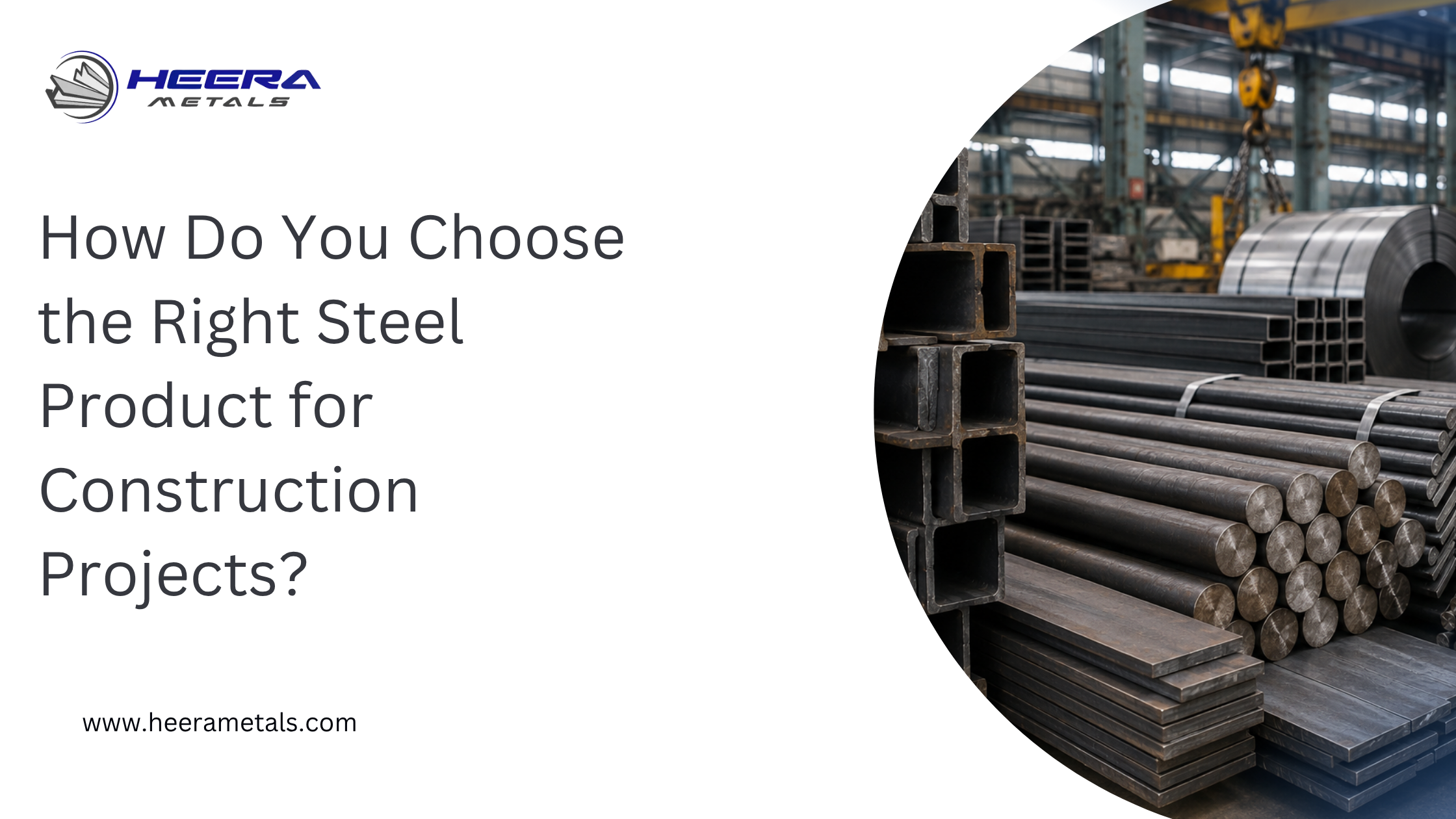
How Do You Choose the Right Steel Product for Construction Projects?
Choosing the right steel product for a construction project comes down to matching the material to the structural requirement, not just picking whatever is available or cheapest. The wrong steel product, grade, or section can lead to compromised load-bearing capacity, faster corrosion, or costly rework once construction is underway. The main types of steel products used in construction, the factors that should drive your selection, and how to match steel to residential, commercial, and industrial projects.
Understanding the Main Types of Steel Products Used in Construction
Construction projects typically draw on several categories of steel products, each suited to a different structural role.
Reinforcement Bars (TMT Bars)
Steel reinforcement bars, most commonly TMT bars, are used inside concrete to provide tensile strength that concrete alone cannot supply. They are essential in slabs, beams, columns, and foundations across nearly every type of building.
Structural Steel Sections
Structural steel sections, including angles, channels, beams, and joists, form the load-bearing framework in structures such as industrial sheds, warehouses, and multi-story frameworks. These sections are selected based on the load they need to carry and the span they need to cover.
Steel Plates and Sheets
Plates and sheets are used for flooring, cladding, base plates, and fabrication work where a flat, load-distributing surface is needed. Checkered plates, in particular, are common in industrial flooring and platforms where slip resistance matters.
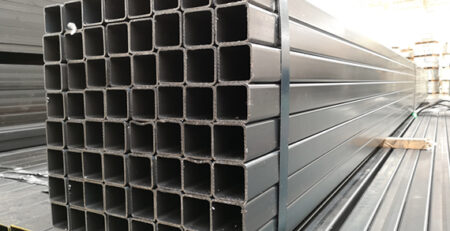
Steel Pipes and Tubes
Pipes and tubes serve structural and functional roles, from structural columns and railings to water, gas, and utility lines. ERW pipes, black pipes, and galvanized pipes each suit different applications depending on pressure requirements and exposure to moisture.
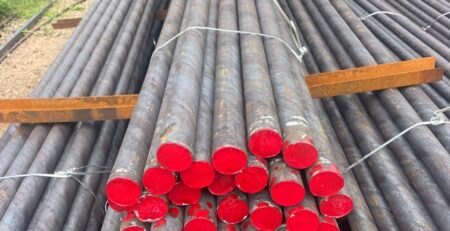
Bars and Rods
Round bars, square bars, and flats are used across fabrication, machinery components, and smaller structural elements where a solid steel form is required rather than a hollow section.
Key Factors to Consider When Choosing Steel for Construction
Selecting the right steel product means working through a defined set of considerations rather than defaulting to habit or the lowest quoted price.
Load-Bearing Requirements
The single biggest factor in steel selection is how much load the material needs to carry. Beams, columns, and reinforcement bars all need to be sized and graded according to the structural engineer’s load calculations, since undersized steel directly compromises structural stability.
Steel Grade and Strength
Different steel products come in different grades, each defined by yield strength and tensile strength. Reinforcement bars, for example, are commonly available in grades such as Fe 500 and Fe 500D, with higher grades used where greater load-bearing capacity is required. Structural sections follow their own grading systems based on the applicable standard. Matching grade to structural demand is what prevents both under-engineering and unnecessary over-spending on steel that exceeds what the design actually needs.
Application and Structural Role
The same steel category can serve very different purposes depending on the project. A structural beam supporting a roof has different requirements than a plate used for flooring, even though both may be classified broadly as construction steel. Defining the exact application early prevents mismatched product selection later.
Environmental Conditions and Corrosion Resistance
Steel exposed to coastal air, high humidity, or industrial chemical environments needs stronger corrosion resistance than steel used in a dry, inland setting. Galvanized coatings, stainless steel, or corrosion-resistant TMT bars are worth the additional consideration in these conditions, since replacing corroded structural steel later is far more disruptive than specifying the right material upfront.
Compliance with Construction Standards
Steel products used in construction should meet the relevant national or project-specified standards, with documentation such as mill test certificates confirming the batch matches its stated grade. This is particularly important on projects where a consulting engineer or regulatory authority requires proof of compliance before material is approved for use.
Budget and Project Scale
Cost matters, but steel selection should start from structural requirement and compliance, with budget applied to choose between compliant options rather than driving the grade or product choice on its own. Buying underspecified steel to save cost upfront typically shifts the cost to repairs, reinforcement, or safety issues later.
Matching Steel Products to Project Type
Different construction sectors tend to prioritize different combinations of the factors above.
| Project Type | Common Steel Needs | Key Priorities |
| Residential construction | TMT bars, MS angles, flats | Balanced strength and cost, ease of handling on smaller sites |
| Commercial buildings | Structural sections, high-grade TMT bars, plates | Higher load capacity, compliance documentation for approvals |
| Industrial construction | Structural beams, pipes, checkered plates | Durability under heavy use, corrosion resistance, bulk availability |
| Infrastructure projects | High-grade TMT bars, structural steel, pipes | Seismic performance, long-term durability, strict standards compliance |
This is a general guide rather than a fixed rule. The structural engineer’s specification for a given project always takes priority over these general patterns.
Steel Selection Checklist for Construction Buyers
Use the following checklist when evaluating steel products for a project:
- Confirm the structural engineer’s load and grade requirements before sourcing
- Identify the specific application, whether reinforcement, structural framing, flooring, or piping
- Assess the environmental exposure the steel will face over its service life
- Confirm the standard the steel needs to comply with and request supporting documentation
- Compare compliant product options based on cost and availability, not grade alone
- Verify supplier quality checks, including mill test certificates and inspection reports
- Confirm lead times align with your construction schedule
Conclusion
Choosing the right steel product for a construction project is a process of matching structural requirement, grade, environmental exposure, and compliance documentation to the specific application, not a single decision made on price. Working through load requirements, application, and standards compliance before comparing suppliers helps ensure the steel you choose supports the safety and durability of the finished structure. If you’re sourcing steel products for an upcoming project and want help matching the right grade and specification to your requirements, reaching out to a supplier who can walk through your project details is a practical next step.






Leave a Reply