
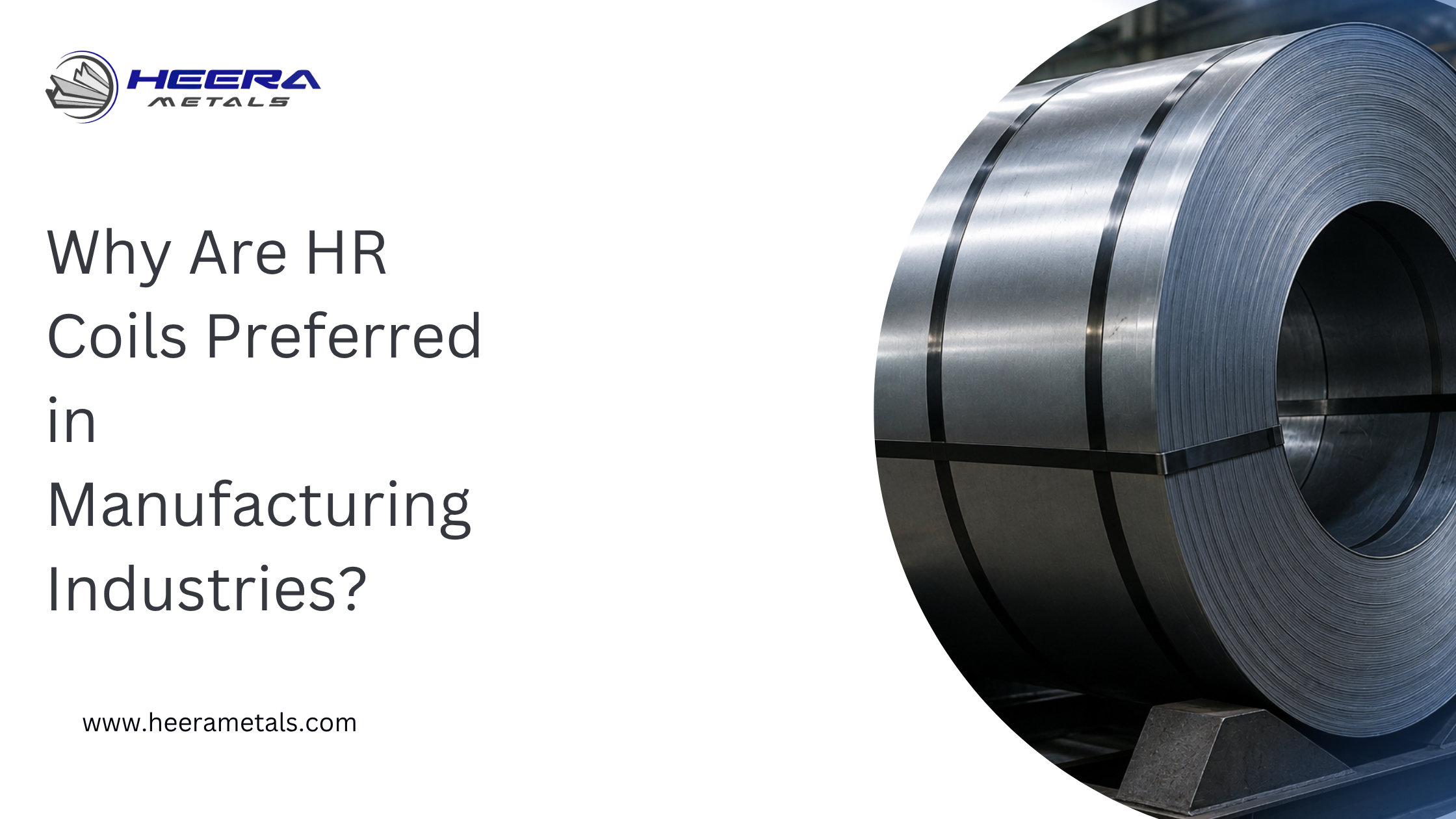
Why Are HR Coils Preferred in Manufacturing Industries?
Introduction
Walk into almost any fabrication shop, and you will find a stack of steel coils waiting to be cut, shaped, or welded into something else entirely. A large share of that stock is HR coil.
Hot rolled coil has become the default raw material for manufacturers who need strength, flexibility, and a price that does not eat into margins. From automotive frames to pipeline construction, hot rolled steel coil shows up in more finished products than most people realize.
This article looks at what makes hr coils so widely used, how they are produced, where they perform best, and what buyers should check before ordering in bulk.
What Exactly Is an HR Coil
Hot rolled coil is steel that has been heated above its recrystallization temperature and then rolled into thin, flat sheets before being wound into large coils for storage and transport.
The heating process is what sets it apart from cold rolled steel. Because the steel is shaped while still hot, it comes out softer, easier to form, and free of the internal stresses that cold rolled products often carry.
That combination of softness and strength is exactly why so many manufacturers reach for hr steel coil first, especially when a project calls for large sheets, thick gauges, or components that will be welded and reshaped later in production.
Why Manufacturers Keep Choosing Hot Rolled Steel Coils
Strength Without the Extra Cost
Hot rolled coils deliver solid tensile strength at a lower price point than cold rolled or specialty alloy alternatives. For manufacturers running large volumes, that price gap adds up fast across an entire production run.
Easier Welding and Machining
Because the rolling process happens at high temperature, the resulting grain structure is more uniform. That translates into smoother welding and machining, with fewer cracks or defects showing up during fabrication.
Flexibility Across Applications
Few materials cover as much ground as hot rolled steel. Structural beams, pipeline casing, automotive chassis parts, agricultural equipment, and shipbuilding panels all draw from the same base material, just in different thicknesses and grades.
Better Suited to Large Dimensions
Hot rolling naturally produces wider and thicker sheets than cold rolling allows. That makes hr coils the practical choice whenever a project needs oversized panels or heavy gauge plate.
Faster Turnaround From Mill to Site
Because hot rolled coil skips the additional cold reduction and annealing steps, it typically reaches the market faster and in higher volumes than cold rolled steel, which matters when a construction or manufacturing timeline is tight.
Where HR Coils Show Up in Real Production
A single coil rarely stays in one shape for long. Once it leaves the mill, it gets slit, cut to length, or pressed into an entirely different product.
Construction and infrastructure: structural framing, reinforcement components, and roofing substructures all rely on hot rolled coil for its combination of strength and weldability.
Automotive manufacturing: chassis components, wheel rims, and underbody panels are commonly stamped from hr coils before further processing.
Pipe and tube production: ERW pipes and structural tubing are typically formed by slitting hr coil into strips and rolling them into shape.
Heavy equipment and machinery: agricultural equipment, cranes, and industrial machinery frames depend on hot rolled steel for parts that need to absorb stress and vibration without cracking.
Shipbuilding and tanks: the thicker gauge options within hr coil are a natural fit for hulls, tanks, and pressure vessels that need to hold up under continuous load.
Hot Rolled Coil Versus Cold Rolled Coil
Buyers new to steel sourcing often ask which option fits their project better. The honest answer depends on what the final product needs to do.
Hot rolled coil tends to win when a project prioritizes cost efficiency, larger dimensions, and ease of forming. Cold rolled coil tends to win when a project needs a tighter dimensional tolerance or a smoother surface finish for visible or precision parts.
Most manufacturing operations end up using both, choosing hot rolled steel for structural and load bearing components while reserving cold rolled steel for parts where appearance or exact thickness control matters more.
What to Check Before Buying HR Coils in Bulk
Sourcing hr coils for a manufacturing line is not just about finding the lowest quote. A few details separate a smooth order from a production delay.
Confirm the grade matches your application, since carbon content changes strength and formability significantly between grades.
Ask for mill test certificates so you can verify chemical composition and mechanical properties before the material reaches your shop floor.
Check coil width and thickness tolerances carefully, particularly if your equipment is calibrated for a specific gauge range.
Clarify surface finish requirements upfront, since some downstream processes are sensitive to scale or oxide layers left from the hot rolling process.
Work with a supplier who can commit to consistent lead times, since inconsistent delivery schedules tend to cause more disruption on a production floor than almost any other sourcing issue.
Frequently Asked Questions
Why do manufacturers prefer hot rolled coils over other steel products?
Hot rolled coils offer a strong balance of strength, cost, and ease of fabrication, which makes them practical for high volume manufacturing where budgets and timelines both matter.
What industries use hr coils the most?
Construction, automotive, pipe and tube manufacturing, heavy equipment production, and shipbuilding are among the biggest consumers of hot rolled steel coil.
Is hr coil suitable for outdoor structural applications?
Yes, though exposed applications often benefit from additional coating or galvanization to manage corrosion over time, especially in humid or coastal environments.
How is hr coil different from mild steel coil?
Mild steel coil refers to the carbon content and grade of the steel, while hot rolled coil refers to how the steel was processed. Mild steel is frequently produced and sold in hot rolled coil form.
What should I ask a hot rolled coil supplier before placing a bulk order?
Ask about available grades, thickness tolerances, mill certification, and typical lead times, since these details affect both product quality and your production schedule.
Final Thoughts
Hot rolled coils remain a manufacturing staple because they solve a practical problem well: strong, workable steel at a cost that scales with large production runs. Whether the end product is a pipeline, a vehicle frame, or a piece of heavy machinery, hr coils give manufacturers a dependable starting material that adapts to nearly any fabrication process.
If your production line depends on a steady supply of quality hot rolled steel coil, working with an experienced hr coil supplier who understands your industry’s specifications can make the difference between a smooth production run and a costly delay. Reach out to discuss grades, thicknesses, and bulk availability suited to your next project.



Leave a Reply