
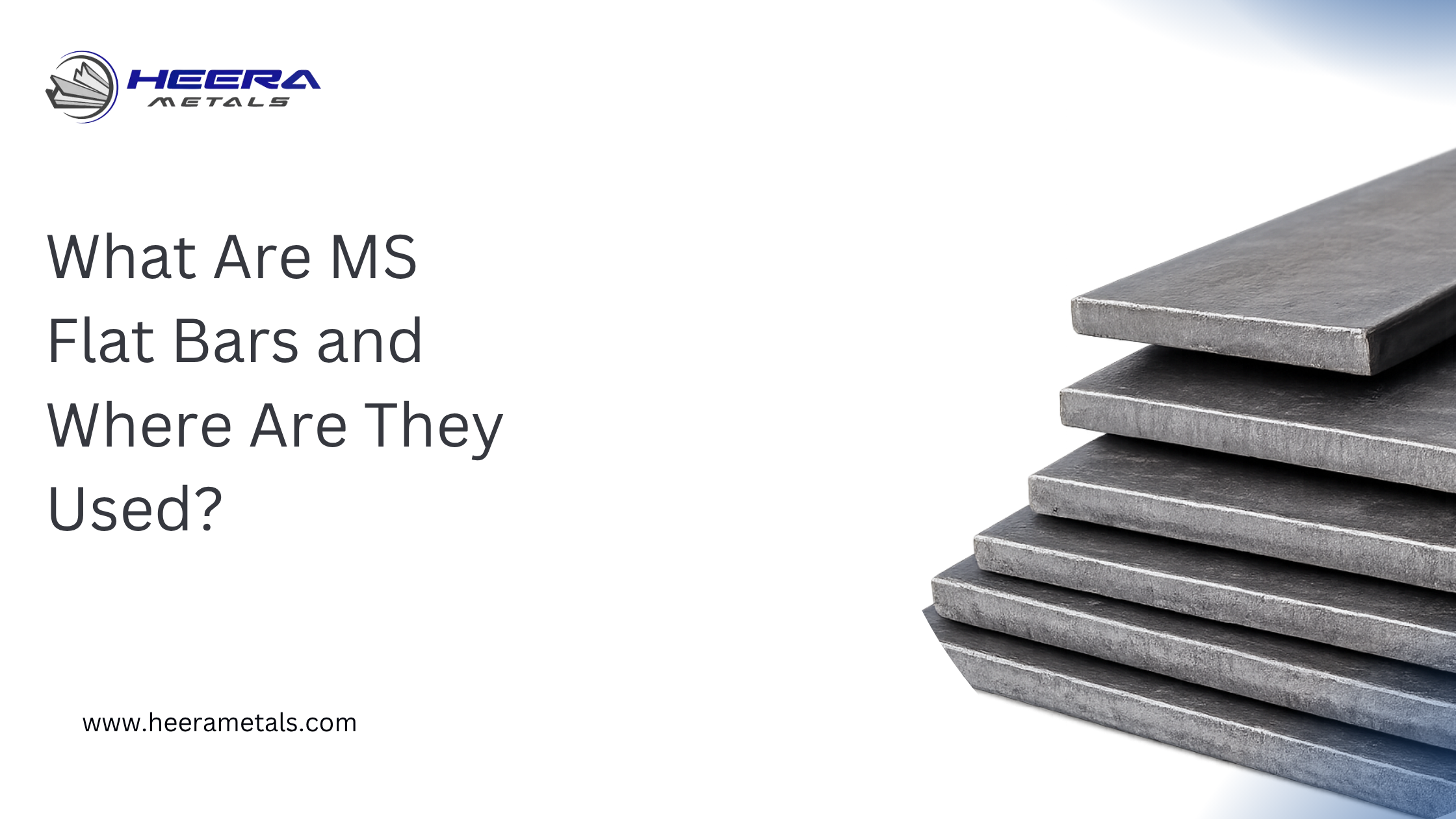
What Are MS Flat Bars and Where Are They Used?
Steel products play a vital role in construction, fabrication, manufacturing, and infrastructure development. Among the most versatile and widely used steel sections are MS Flat Bars, commonly known as mild steel flat bars. Their simple rectangular shape, combined with excellent strength, weldability, and affordability, makes them an essential material across multiple industries.
From structural support systems and fabrication workshops to engineering projects and industrial facilities, MS flat bars provide practical solutions for a wide range of applications. Their ability to be easily cut, welded, drilled, and fabricated has made them one of the most commonly used steel products in modern construction and manufacturing.
In this article, we’ll explore what MS flat bars are, their key properties, major applications, and why they continue to be a preferred choice for engineers, fabricators, and contractors.
What Are MS Flat Bars?
MS Flat Bars are rectangular sections manufactured from mild steel with a flat surface and uniform thickness. They are available in various widths and thicknesses to suit different structural and fabrication requirements.
Unlike more complex structural sections such as beams or channels, flat bars offer a straightforward design that allows them to be integrated into countless engineering and construction applications. Their combination of strength, flexibility, and ease of fabrication makes them suitable for both structural and non-structural uses.
According to industry references, MS flat bars are commonly used in construction, manufacturing, fabrication, machinery production, transportation equipment, and infrastructure projects due to their versatility and cost-effectiveness.
Why Are MS Flat Bars So Popular?
The popularity of mild steel flat bars comes from their ability to deliver reliable performance without significantly increasing project costs.
One of the biggest advantages of MS flat bars is their excellent workability. Fabricators can easily weld, bend, cut, and machine them according to project specifications. This reduces fabrication time and helps manufacturers create customized components efficiently.
Additionally, their structural strength allows them to perform well in load-bearing and support applications, while their affordability makes them an attractive option for both small-scale and large-scale projects.
Industry manufacturers also highlight their ductility, machinability, and durability as major reasons for their widespread use across engineering and construction sectors.
Applications of MS Flat Bars in Construction
The construction sector is one of the largest consumers of steel flat bars.
MS flat bars are frequently used in structural frameworks where additional reinforcement and support are required. They can be found in building frames, roof support systems, staircases, railings, gates, fencing structures, and fabricated assemblies.
Because of their flat profile, they are particularly useful for creating connections between structural members. Their ease of welding allows contractors to assemble components quickly while maintaining structural integrity.
In residential and commercial construction projects, mild steel flat bars are commonly incorporated into doors, windows, grills, support brackets, and architectural steelwork.
The Role of MS Flat Bars in Fabrication Projects
Fabrication is perhaps the area where MS flat bars demonstrate their greatest versatility.
Fabricators use flat bars for fabrication projects because they can be easily processed into custom shapes and components. Their uniform dimensions make them ideal for manufacturing brackets, support plates, machine frames, equipment bases, and industrial structures.
Unlike some specialty metals that require advanced processing techniques, mild steel flat bars can be worked using standard fabrication equipment, making them highly economical for workshops and manufacturing facilities.
Their adaptability also helps reduce material waste and improve production efficiency, making them a preferred material in industrial fabrication environments.
How MS Flat Bars Support Industrial Manufacturing
Industrial facilities rely heavily on fabricated steel components for machinery, equipment support, and operational infrastructure.
MS flat bars are commonly used in the production of machine frames, equipment supports, cable trays, mounting brackets, conveyor systems, and fabrication assemblies. Their strength enables them to withstand operational loads, while their machinability allows manufacturers to create precise components for specialized applications.
Many machinery manufacturers also use flat bars in equipment reinforcement systems where structural stability is required without significantly increasing overall weight.
This combination of strength and fabrication flexibility makes mild steel flat bars an important component of modern manufacturing operations.
Applications in Infrastructure and Engineering Projects
Infrastructure development requires materials capable of delivering long-term structural performance under demanding conditions.
MS flat bars are widely used in infrastructure projects such as bridges, utility structures, support frames, pedestrian walkways, industrial platforms, and transportation facilities. Their ability to handle structural loads while remaining easy to fabricate makes them suitable for both permanent and temporary structures.
Engineering contractors frequently utilize flat bars for reinforcement applications, structural connections, and support systems where durability and cost efficiency are equally important.
As infrastructure investments continue to grow, the demand for reliable steel products such as mild steel flat bars remains strong.
Why Engineers and Fabricators Prefer MS Flat Bars
The continued demand for MS flat bars is driven by a combination of practical and economic benefits.
They offer excellent weldability, allowing strong and reliable connections between structural components. Their machinability enables efficient drilling, cutting, and shaping operations. Their ductility allows them to be bent and formed without cracking, making them highly adaptable to different project requirements.
Most importantly, they provide an excellent balance between structural performance and cost, helping businesses maintain project budgets without sacrificing quality.
This balance is one of the primary reasons why MS flat bars for engineering works remain a preferred material across construction, fabrication, and manufacturing industries.
Choosing the Right MS Flat Bars
Selecting the appropriate flat bar depends on several project-specific factors, including load requirements, fabrication processes, environmental conditions, and dimensional specifications.
For structural applications, engineers typically consider thickness, width, and grade to ensure adequate strength and durability. For fabrication projects, machinability and welding requirements often play a larger role in material selection.
Many infrastructure and engineering projects in India utilize grades compliant with IS 2062 standards due to their proven performance in structural and fabrication applications.
Conclusion
MS flat bars have earned their place as one of the most widely used steel products in the construction, fabrication, manufacturing, and infrastructure sectors. Their simple design, combined with excellent strength, weldability, machinability, and affordability, makes them a highly versatile material for countless applications.
Whether used in structural frameworks, fabrication workshops, industrial facilities, machinery production, or infrastructure projects, mild steel flat bars provide reliable performance and long-term value. Their adaptability allows engineers and fabricators to create durable solutions while maintaining cost efficiency, making them an essential component of modern engineering and construction.



Leave a Reply