
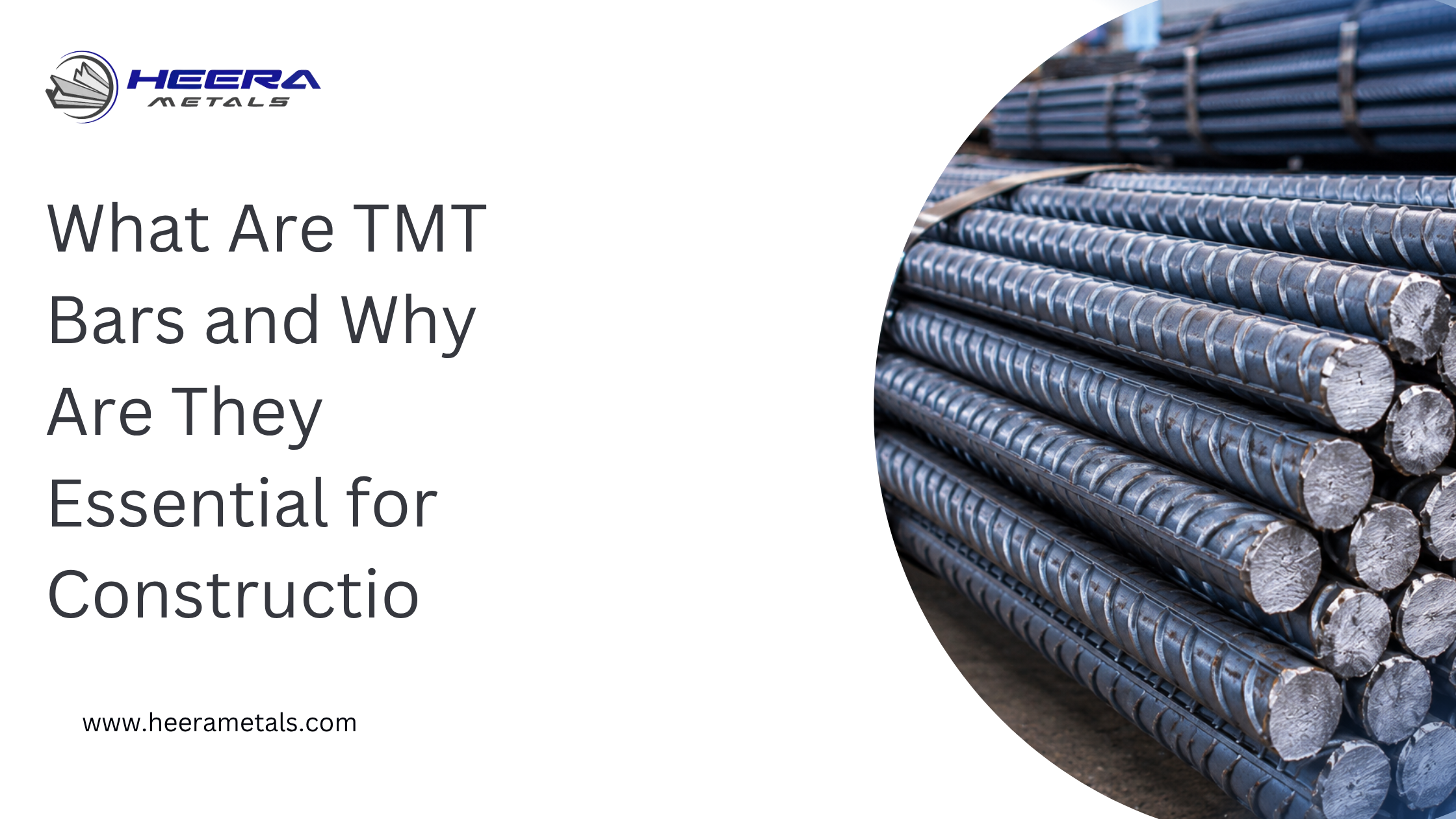
What Are TMT Bars and Why Are They Essential for Construction?
Introduction: The Steel That Holds Modern Buildings Together
Every time you walk into a concrete building a hospital, a school, a residential tower, a flyover you are standing inside a structure held together by steel. Not just any steel, but a specific, engineered product that transformed the way the world builds: TMT bars.
Yet for all their importance, most people outside the construction industry have never heard of them. And even within the industry, the science behind what makes TMT bars superior to conventional reinforcement steel is often misunderstood or underappreciated.
Here’s the reality: without high-quality TMT bars for construction, modern reinforced concrete structures as we know them simply wouldn’t exist. They wouldn’t be safe enough in earthquake zones, durable enough in coastal environments, or strong enough to carry the loads demanded by multi-storey buildings and large-span infrastructure.
This guide explains exactly what TMT bars are, how they are made, why they outperform traditional reinforcement options, and how to choose the right grade for your construction project.
What Are TMT Bars?
TMT stands for Thermo Mechanically Treated and that process is what makes all the difference.
TMT bars are high-strength construction steel bars produced through a precisely controlled manufacturing process that combines heat treatment and mechanical deformation. Unlike conventional cold-twisted deformed (CTD) bars that relied on mechanical twisting to achieve strength a process that introduced internal stress and reduced ductility TMT bars achieve their properties through thermal treatment, leaving the steel internally stress-free and structurally superior.
The TMT Manufacturing Process
The production of thermo mechanically treated bars follows three critical stages:
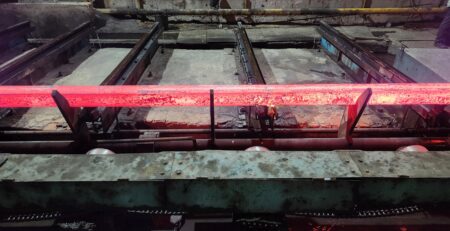
1. Quenching Hot-rolled steel bars emerging from the rolling mill at around 1,000°C pass immediately through a water-cooling system. The outer surface cools rapidly, forming a hardened martensitic rim while the core remains hot and austenitic.
2. Self-Tempering Once the bars exit the quenching zone, residual heat from the still-hot core flows outward, tempering the hardened outer surface. This produces a tough, ductile outer layer the pearlitic-ferritic core that gives TMT bars their unique combination of surface hardness and inner flexibility.
3. Atmospheric Cooling The bars are then allowed to cool naturally on a cooling bed. This final stage stabilises the microstructure, completing the formation of the soft, ductile core that gives TMT steel bars their exceptional elongation properties.
The result is a bar with a hard outer surface providing high tensile strength, wrapped around a soft, flexible core providing ductility a combination no mechanical twisting process can replicate.
TMT Bar Grades: Understanding Fe 415, Fe 500, and Fe 550
TMT bars are classified by grade, which denotes the minimum yield strength in megapascals (MPa). Choosing the correct grade is one of the most important decisions in any structural reinforcement specification.
Fe 415
The entry-level structural grade, Fe 415 offers a yield strength of 415 MPa with higher elongation values making it the most ductile option. It is best suited for:
- Low-rise residential buildings in seismically active zones where maximum ductility is required
- Structures in highly corrosive coastal environments where flexibility under stress matters
- Footings, slabs, and secondary structural members
Fe 500 and Fe 500D
Fe 500 is the most widely used grade in Indian and export construction markets, balancing high strength with adequate ductility. The ‘D’ suffix denotes enhanced ductility higher elongation and tighter carbon equivalent limits making Fe 500D TMT bars the preferred specification for earthquake-resistant structures.
Applications include:
- Multi-storey residential and commercial buildings
- Bridges, flyovers, and elevated infrastructure
- Industrial floors and heavy-duty structural elements
Fe 550 and Fe 550D
Fe 550 TMT bars deliver the highest yield strength in the standard range, enabling engineers to reduce bar diameter and overall steel consumption in heavily loaded structures. They are specified for:
- High-rise construction where structural efficiency is paramount
- Long-span bridges and large industrial structures
- Foundations and columns under extreme load conditions
For most residential construction projects, Fe 500D strikes the optimal balance between strength, ductility, and cost. For high-rise or infrastructure applications, Fe 550 or Fe 550D is typically the more appropriate specification.
Key Benefits of TMT Bars in Modern Building Construction
The superiority of TMT bars over traditional reinforcement isn’t marginal it’s fundamental. Here’s why these construction reinforcement bars have become the global standard.
High Tensile Strength
The quench-and-self-temper process produces bars with tensile strengths that consistently exceed the minimum yield strength by a controlled margin ensuring the bar will deform before fracturing, giving engineers a predictable safety reserve in load-bearing structures.
Superior Ductility and Elongation
The soft pearlitic core gives TMT bars elongation values of 14.5% to 20% depending on grade. This means the bar stretches significantly before breaking critical behaviour in dynamic loading scenarios such as earthquakes, blast events, or foundation settlement.
Earthquake Resistance
Earthquake resistant TMT bars particularly the ‘D’ grades are engineered specifically for seismic applications. Their combination of high yield strength and superior elongation allows reinforced concrete members to absorb and dissipate seismic energy through controlled deformation, preventing catastrophic brittle failure. In high-seismicity regions, this property is not optional it is a life-safety requirement.
Corrosion Resistance
The thermal treatment process produces a refined surface microstructure that naturally resists corrosion better than cold-twisted bars. Many TMT bar manufacturers further enhance this through controlled chemistry reducing phosphorus and sulphur content to produce corrosion resistant TMT bars with extended service life in aggressive environments.
For structures near coastlines, industrial zones, or areas with high groundwater levels, specifying corrosion-resistant TMT bars dramatically reduces the risk of premature reinforcement degradation and the costly structural repairs that follow.
Weldability
The low carbon equivalent values of quality TMT steel bars mean they can be welded without pre-heating, simplifying on-site connections and enabling faster construction timelines. This is a significant practical advantage over higher-carbon conventional rebars.
Fire Resistance
The thermal treatment process gives TMT bars better retention of mechanical properties at elevated temperatures compared to cold-worked alternatives an important consideration for fire safety engineering in commercial and public buildings.
Why TMT Bars Are Important for Reinforced Concrete Structures
Concrete is exceptional in compression it resists crushing forces effectively. But it is brittle and weak in tension it cracks under pulling or bending forces. Reinforced concrete resolves this by embedding steel reinforcement bars in the concrete, allowing the composite material to carry both compressive and tensile loads.
For this composite system to perform, the steel must:
- Bond effectively with the surrounding concrete (the ribbed surface profile of TMT bars ensures mechanical interlock)
- Carry tensile forces without yielding prematurely
- Deform in a controlled, ductile manner under overload conditions
- Maintain performance over a service life measured in decades
TMT bars satisfy all four requirements more effectively than any alternative reinforcement option available at comparable cost. This is why concrete reinforcement steel globally has converged on the TMT specification.
Difference Between TMT Bars and Traditional Steel Bars
Understanding what TMT bars replaced helps clarify why they represent such a significant advance in modern construction technology.
| Property | TMT Bars | Traditional CTD/TOR Bars |
| Manufacturing process | Thermo mechanical treatment | Cold twisting and deformation |
| Internal stress | Stress-free | High residual stress |
| Ductility | High (14.5%–20% elongation) | Low (8%–10% elongation) |
| Weldability | Excellent | Poor |
| Corrosion resistance | Superior | Lower |
| Seismic performance | High | Low |
| Fatigue resistance | High | Low |
| Cost efficiency | Better long-term value | Lower upfront but higher lifecycle cost |
Traditional cold-twisted bars achieved surface deformation through mechanical twisting a process that introduced residual stresses, reduced ductility, and compromised weldability. Under seismic or dynamic loading, these limitations translate into real structural vulnerability. TMT bars eliminated these drawbacks through process innovation, delivering a structurally superior product without a significant cost premium.
Applications of TMT Bars in Commercial and Infrastructure Projects
The uses of TMT bars in construction span every segment of the built environment:
- Residential buildings: From single-storey houses to 30+ storey apartment towers
- Commercial construction: Offices, retail centres, hotels, and mixed-use developments
- Bridges and flyovers: Main girders, deck slabs, piers, and abutments
- Industrial structures: Factory floors, storage silos, and heavy equipment foundations
- Water infrastructure: Dams, reservoirs, water treatment plants, and pipelines
- Transportation: Metro viaducts, railway bridges, road underpasses, and tunnels
- Coastal and marine structures: Jetties, sea walls, and coastal protection works
In each application, the combination of structural stability, high tensile strength, and durability under service conditions makes TMT bars the reinforcement specification of choice for structural engineers worldwide.
How to Choose the Best TMT Bars for Construction Projects
Selecting the right TMT bars involves evaluating several interdependent factors:
1. Match Grade to Structural Demand
Use Fe 415 for highly ductile requirements in seismic zones; Fe 500D for most residential and commercial buildings; Fe 550D for high-rise and heavy infrastructure.
2. Verify Manufacturing Certification
Specify bars manufactured to IS 1786:2008 (Indian Standard) or equivalent international standard (ASTM A615, BS 4449, or EN 10080). Insist on mill test certificates confirming chemical composition and mechanical properties.
3. Assess the Operating Environment
In coastal, industrial, or high-humidity environments, specify corrosion resistant TMT bars with enhanced chemistry or additional surface protection.
4. Check the Rib Pattern
A well-formed transverse rib pattern consistent and deep ensures optimal bond with concrete. Inspect bars visually and request standard compliance documentation from the supplier.
5. Source from Reputable Manufacturers
Best TMT bars for construction come from manufacturers with integrated steelmaking (not just rolling), consistent raw material quality, and third-party quality audits. Avoid secondary market bars of unverified origin, particularly for primary structural applications.
Importance of Corrosion Resistant TMT Bars in Coastal Areas
Coastal construction presents the most demanding corrosion environment for concrete reinforcement. Chloride ions from sea air penetrate concrete cover and attack the steel reinforcement beneath a process called chloride-induced corrosion that causes rebar to expand, crack the surrounding concrete, and progressively compromise building durability and safety.
Corrosion-resistant TMT bars address this through:
- Controlled chemistry: Low carbon, phosphorus, and sulphur content slow electrochemical corrosion
- Refined microstructure: The TMT process produces a denser, more homogeneous surface layer less permeable to chloride penetration
- Epoxy-coated variants: For extreme marine environments, fusion-bonded epoxy coated TMT bars provide an additional barrier layer
Combined with adequate concrete cover depth and low water-cement ratio concrete mixes, corrosion-resistant TMT bars give coastal structures the service life that engineers and owners require.
Conclusion: Why TMT Bars Are Essential for Construction
TMT bars are not simply another construction material. They are the product of decades of metallurgical research and manufacturing innovation, purpose-engineered to solve the fundamental challenges of structural reinforcement strength, ductility, durability, and seismic safety in a single, cost-effective product.
From the foundations of a family home to the pylons of a major bridge, TMT bars for construction provide the structural reinforcement that makes modern buildings safe, durable, and capable of withstanding the forces nature and time impose on them.
Whether you are a structural engineer specifying reinforcement for a high-rise development, a contractor sourcing materials for a residential project, or a developer evaluating construction quality standards, understanding TMT bars their grades, properties, and applications is fundamental to making sound decisions that protect both your investment and the people your buildings will serve.



Leave a Reply