
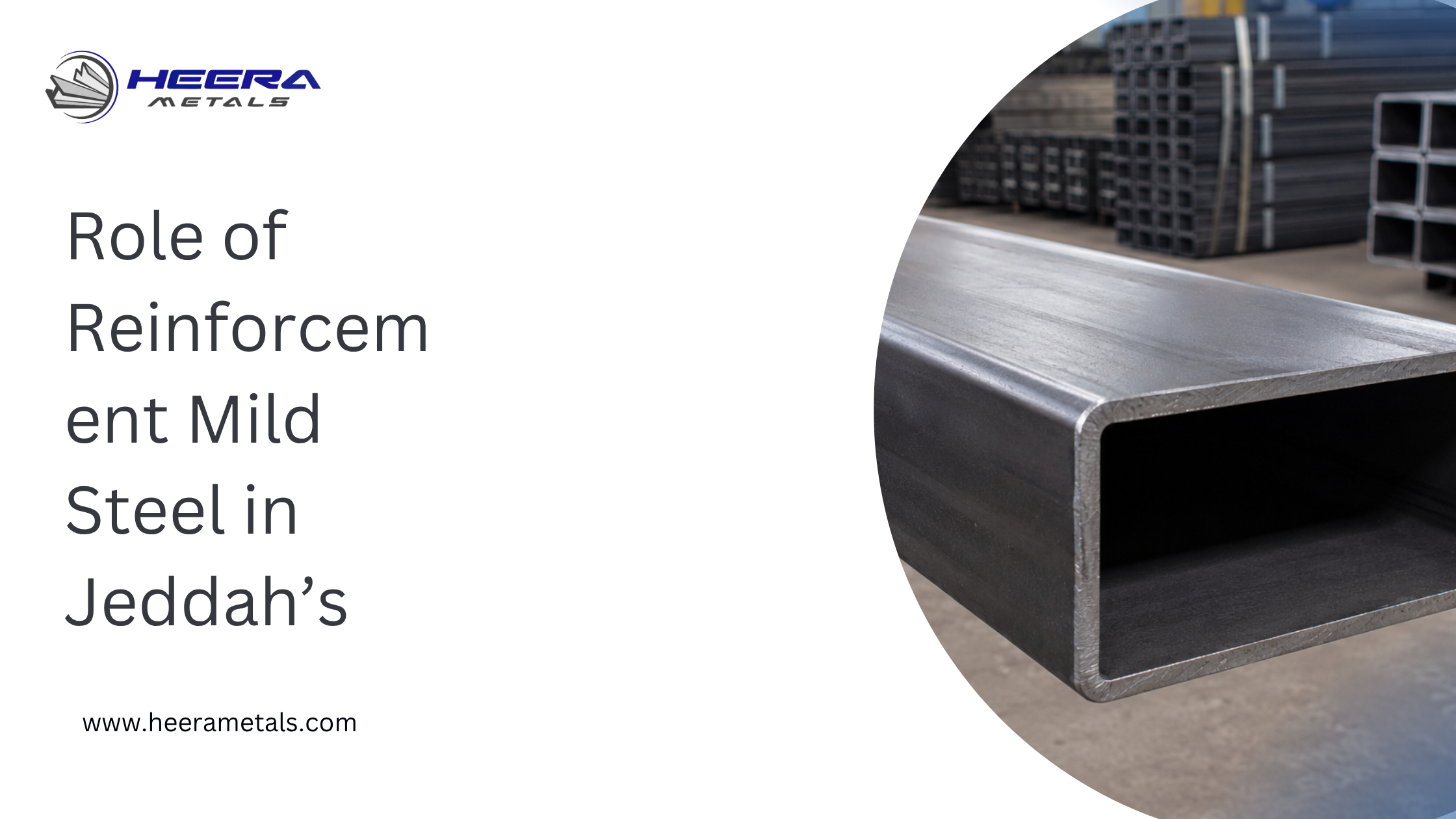
The Vital Role of Reinforcement Mild Steel in Jeddah’s Coastal Mega-Projects
As the “Bride of the Red Sea,” Jeddah is currently undergoing a radical architectural transformation. Driven by the ambitious goals of Saudi Vision 2030, the city is transitioning from a historic port into a global hub for tourism, commerce, and high-tech urban living. From the sprawling Jeddah Central Project to the luxury developments along the Obhur Corniche, the demand for high-performance building materials has never been more critical.
At the heart of these structural marvels lies a foundational hero: Reinforcement Mild Steel. In the unique and challenging environment of Jeddah’s coastline, selecting the right grade of mild steel is not just a matter of engineering it is a matter of long-term structural survival.
The Infrastructure Boom: Jeddah’s Red Sea Transformation
Jeddah’s skyline is being reshaped by some of the most complex engineering feats in the Middle East. Projects like the Jeddah Economic City and the revitalization of the historic Al-Balad district require immense quantities of structural metal. However, coastal construction introduces variables that inland projects rarely face.
The Impact of Saudi Vision 2030 on Steel Demand
Under the leadership of the Public Investment Fund (PIF), Jeddah is seeing a surge in “Giga-projects.” These projects demand a steady supply of high-tensile reinforcement steel to support the weight of skyscrapers that often exceed 300 meters in height. The scale of these projects requires a supply chain that can provide thousands of tons of steel monthly without compromising on quality.
Why Mild Steel? The Engineering Perspective
Mild steel, specifically in the form of reinforcement bars (rebar) and structural plates, offers a unique combination of ductility and tensile strength. This makes it the ideal candidate for the diverse architectural requirements of the Middle East.
Ductility and Seismic Resilience
Jeddah is situated near the Red Sea rift, meaning seismic considerations are a vital part of structural design. Reinforcement mild steel provides the necessary “give” or ductility. In the event of an earthquake, mild steel allows a building to absorb energy and deform slightly without a catastrophic collapse, protecting thousands of lives in high-density urban areas.
Weldability and Ease of Fabrication
Unlike high-carbon steel, mild steel contains between 0.05% and 0.25% carbon. This lower carbon content makes it incredibly easy to weld and bend on-site. For the intricate reinforcement cages needed for the Jeddah Metro or bridge foundations, mild steel allows contractors to move faster and reduce labor costs.
The Coastal Challenge: Combatting Corrosion and Salinity
Building near the Red Sea presents a significant technical hurdle: Corrosion. The high salinity of the air and the brackish groundwater in Jeddah can lead to “concrete cancer”—a process where internal steel rusts, expands, and cracks the surrounding concrete.
The Red Sea Environment
The Red Sea is one of the saltiest bodies of water in the world. According to World Steel Association research, salt particles can travel several kilometers inland. For Jeddah’s coastal mega-projects, this means reinforcement mild steel must be handled with care.
Solutions for Longevity
To ensure the 100-year design life required for major Saudi infrastructure, engineers utilize several strategies:
- Controlled Chemical Purity: Using steel with low sulfur and phosphorus levels to prevent internal impurities.
- Increased Concrete Cover: Providing a thicker layer of concrete over the steel.
- Surface Treatments: Utilizing epoxy-coated or galvanized mild steel to provide a physical barrier against salt-laden moisture.
Understanding Technical Standards: ASTM vs. SASO vs. IS
In the Saudi Arabian construction sector, compliance is non-negotiable. Most Jeddah-based contractors require reinforcement steel to meet ASTM A615 Grade 60 or the equivalent SASO (Saudi Standards, Metrology and Quality Organization) benchmarks.
Comparison of International Steel Grades
| Property | Indian Standard (IS 2062) | American (ASTM A615) | Japanese (JIS G3112) |
| Common Use | Structural/Reinforcement | Reinforcement Bars | SE Asian Projects |
| Yield Strength | 250 – 350 MPa | 420 MPa (Gr 60) | 295 – 490 MPa |
| Ductility | High | Medium/High | High |
| Jeddah Equivalence | E250 / E350 | Grade 40 / 60 | SD345 / SD390 |
At Heera Metals, we ensure our Indian-manufactured mild steel aligns perfectly with these international specifications, providing Mill Test Certificates (MTC) that satisfy local KSA consultants.
Sourcing from India The Strategic Advantage for KSA
As a prominent manufacturer and exporter, Heera Metals has become a trusted partner for Saudi Arabian construction firms. Sourcing reinforcement mild steel from India offers several strategic advantages for Jeddah’s mega-projects.
Cost-Effectiveness for Bulk Procurement
With the scale of projects like Red Sea Global, cost management is vital. Indian mild steel provides a high-quality, cost-effective alternative to European or North American imports. By optimizing the “Cost per Ton,” developers in Jeddah can reallocate funds toward high-tech finishes and smart-city technology.
Logistics via Jeddah Islamic Port
The proximity of Indian ports (like Mundra or Nhava Sheva) to the Jeddah Islamic Port ensures shortened lead times. Our logistics team specializes in:
- Customs Compliance: Navigating the specific documentation required for Saudi imports.
- Quality Verification: Facilitating third-party inspections by SGS or Bureau Veritas before the ship sails.
Conclusion
The future of Jeddah’s skyline is being built today, ton by ton. The success of the city’s coastal mega-projects depends on the invisible strength provided by reinforcement mild steel. It is the material that allows for soaring heights, seismic safety, and architectural freedom.
By choosing a partner like Heera Metals, who understands the specific demands of the Jeddah industrial landscape and the rigors of coastal engineering, developers can ensure their structures stand as icons of the Red Sea for generations to come.


Leave a Reply