
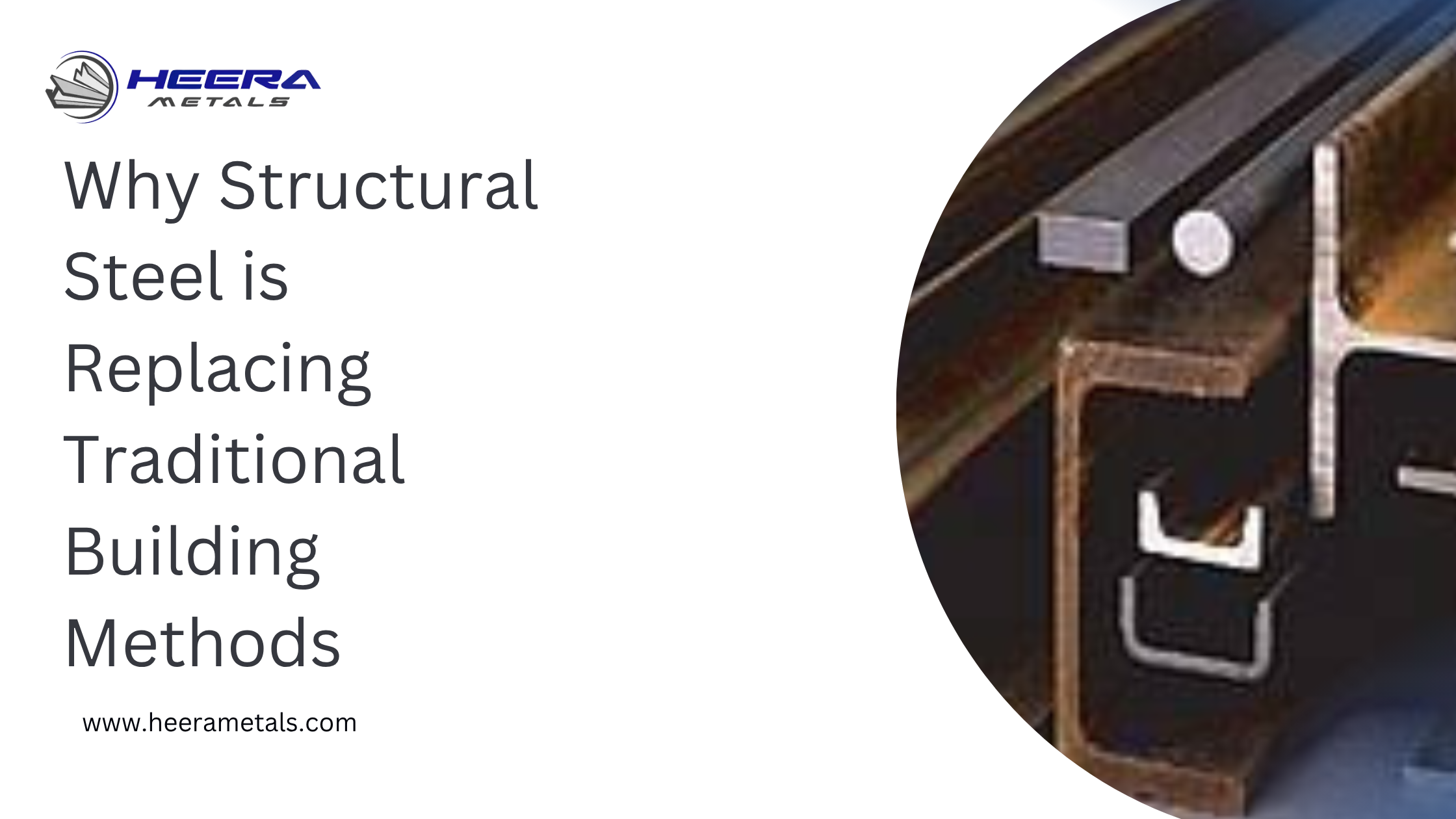
Why Structural Steel is Replacing Traditional Building Methods
The skyline of the modern world is shifting. From the rapid expansion of Riyadh and Dubai to the high-density vertical growth of Singapore and Vietnam, the “old ways” of building are being challenged. For decades, Reinforced Cement Concrete (RCC) and timber were the default choices for developers. However, a decisive shift is occurring: Structural Steel is now the preferred material for high-stakes, large-scale global projects.
Unmatched Speed: Reducing Project Timelines via Pre-fabrication
In the world of real estate and infrastructure, time is literally money. Traditional building methods like RCC require a linear, time-consuming process: erecting formwork, laying rebar, pouring concrete, and waiting weeks for curing.
The Power of Off-site Fabrication
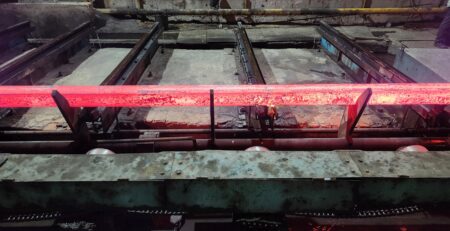
Structural steel operates on a different logic. Unlike concrete, which is “manufactured” on-site, steel components are fabricated with millimetric precision in a controlled factory environment. While the foundation is being poured in Jeddah or Kuala Lumpur, the steel beams and columns are already being cut, welded, and painted at the mill.
Shaving Months off the Schedule
Data from recent industrial projects suggests that using a steel-framed structure can reduce construction time by 30% to 50%. This “fast-track construction” allows developers to:
- Minimize financing costs and bank interest payments.
- Generate revenue earlier through faster occupancy and leasing.
- Reduce on-site labor risks and weather-related delays common in monsoon-heavy regions like Vietnam or Thailand.
Superior Strength-to-Weight Ratio and Design Freedom
When we look at the mechanical properties of materials, structural steel offers an unparalleled strength-to-weight ratio. This physical advantage dictates how buildings are designed and how much they cost to support.
Isotropic Strength vs. Anisotropic Weakness
One of the most technical reasons steel is replacing other materials is its isotropic nature.
- Steel has the same strength in every direction, providing predictable performance under stress.
- Timber is anisotropic; it is strong along the grain but weak across it, making it prone to warping and splitting.
- Concrete is exceptionally strong in compression but brittle and weak in tension, requiring massive amounts of reinforcement steel (rebar) to compensate.
Maximizing Column-Free Spaces
Because steel is so strong relative to its size, it allows for long-span designs. In modern commercial hubs like Singapore or Abu Dhabi, architects want open, column-free floor plans for offices, stadiums, and warehouses. Structural steel can easily span 15 to 20 meters without intermediate supports a feat that would require massive, space-consuming concrete beams.
Economic Advantages: Lowering the Total Cost of Construction
A common misconception in the procurement stage is that structural steel is “more expensive” because the price per ton is higher than concrete. However, a holistic Total Project Cost (TPC) analysis tells a different story.
Reduced Foundation Loads and Soil Pressure
A structural steel building weighs significantly less than its concrete counterpart. This reduction in “dead load” means the building requires a smaller, less expensive foundation. Steel structures can cut foundation costs by 15% to 25%, which is a critical saving in areas with poor soil conditions like the coastal regions of Jeddah or the reclaimed lands of Singapore.
Lower Labor and Minimal On-site Waste
Traditional masonry requires a large, unskilled labor force and generates significant on-site waste and dust. Structural steel is an “assembly” process. It requires a smaller, highly skilled crew to bolt or weld pre-fabricated sections. Furthermore, because components are cut to exact specifications using CAD technology, material wastage is virtually zero.
Sustainability and the Rise of “Green Steel”
Sustainability is no longer a “buzzword”; it is a regulatory requirement in markets like the UAE and Singapore. Structural steel is at the forefront of the Green Building movement.
100% Recyclability and Circular Economy
Unlike concrete, which usually ends up in landfills as rubble after demolition, steel is 100% recyclable. According to the World Steel Association, steel is the most recycled material on the planet. This high “salvage value” makes steel an asset that retains value at the end of a building’s lifecycle.
Energy Efficiency in Harsh Climates
Modern steel construction allows for the integration of high-performance insulation panels. Precision-engineered steel frames ensure tight seals, reducing the energy required for cooling a vital factor for buildings in the scorching climates of Riyadh and the Middle East.
Global Adoption: Middle East and South East Asian Trends
The replacement of traditional methods is most visible in regions experiencing “Giga-development.”
Saudi Arabia: Vision 2030 and Coastal Resilience
In the KSA, structural steel is the backbone of Saudi Vision 2030. Projects like the Jeddah Tower and NEOM require the resilience and speed that only steel can provide. The Saudi Building Code (SBC 301) has updated its technical requirements to favor high-performance steel to improve the resilience of national infrastructure against seismic and wind loads.
South East Asia: Modular Urbanization
In Vietnam and Malaysia, steel is revolutionizing transport infrastructure. From elevated railways to massive steel-clad warehouses, the region is moving away from labor-intensive masonry to embrace modular steel solutions that minimize disruption in congested urban centers like Hanoi and Bangkok.
Comparative Analysis: Structural Steel vs. Traditional Masonry
| Feature | Structural Steel | Reinforced Concrete (RCC) | Timber / Wood |
| Speed of Construction | Extremely Fast (Prefab) | Slow (Curing required) | Moderate |
| Strength-to-Weight | Highest | Low | Moderate |
| Foundation Cost | Lowest (Lightweight) | Highest (Heavy) | Moderate |
| Design Flexibility | High (Long Spans) | Limited | Limited |
| Sustainability | 100% Recyclable | Low Recyclability | Renewable but prone to rot |
| Pest/Fire Resistance | Immune to Pests | Fire Resistant | Highly Vulnerable |
The Structural Choice for the 21st Century
Traditional building methods served the world for centuries, but they cannot keep up with the demands of the 21st-century global economy. Structural steel offers the speed, strength, and sustainability required to build the smart cities of tomorrow.
By shifting from concrete and wood to structural steel, developers in Riyadh, Jeddah, Singapore, and beyond are ensuring their projects are completed faster, last longer, and contribute to a greener planet.



Leave a Reply