
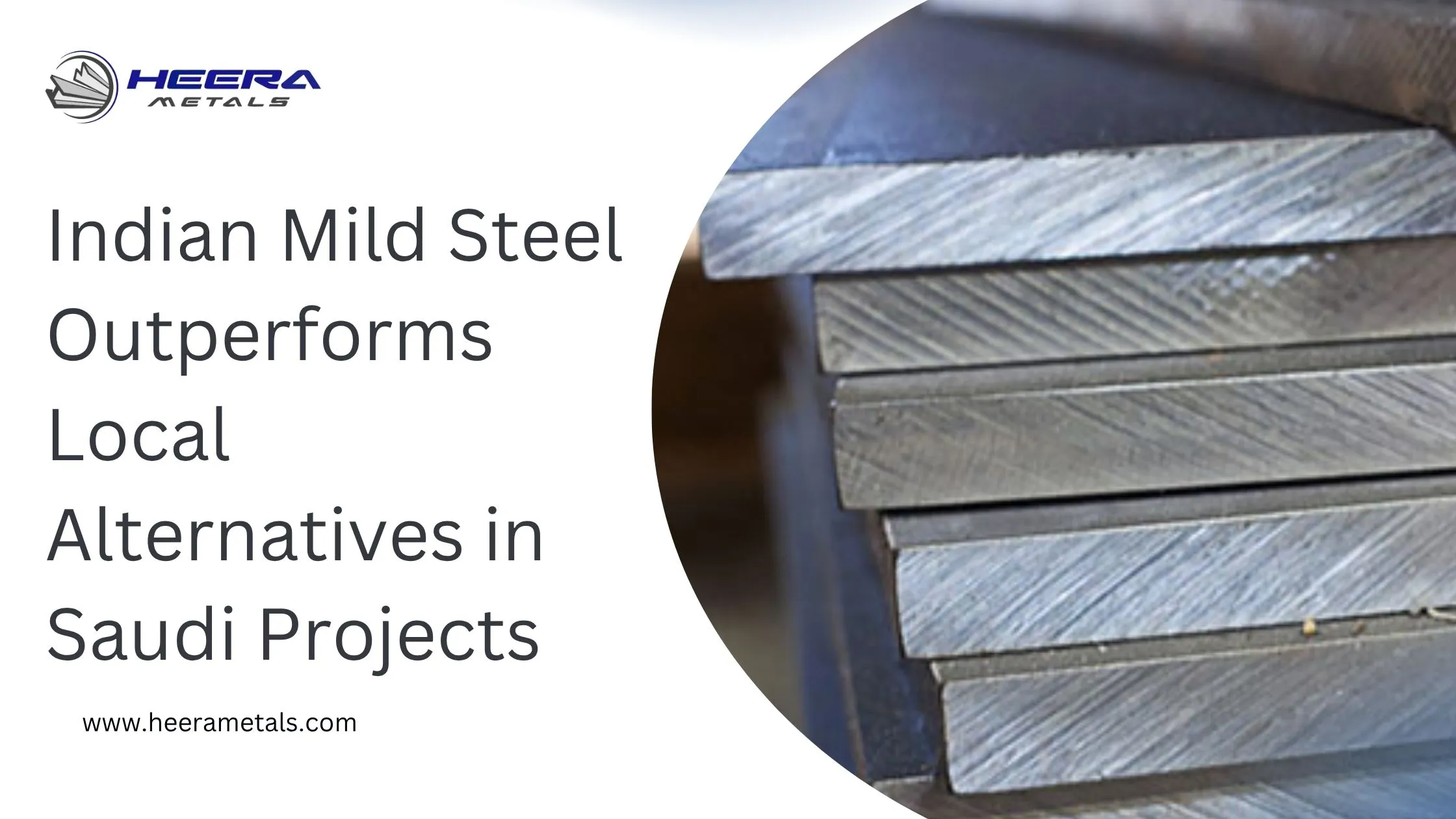
Why Indian Mild Steel Outperforms Local Alternatives in Saudi Projects
Saudi Arabia’s construction and industrial sectors are among the most demanding in the world. From sprawling Vision 2030 infrastructure developments to complex oil and gas installations, every project demands materials that deliver on quality, consistency, and cost-efficiency. Increasingly, contractors and procurement teams are turning to Indian mild steel for Saudi projects and for good reason.
This blog explores why Indian MS steel consistently outperforms local alternatives in KSA, covering quality standards, cost advantages, compliance credentials, and supply chain reliability.
The Growing Demand for Indian Mild Steel in Saudi Arabia
Saudi Arabia’s construction boom shows no signs of slowing. Giga-projects such as NEOM, Red Sea Global, and Diriyah Gate are driving unprecedented demand for structural steel. At the same time, industrial expansion in the oil, gas, and petrochemical sectors continues to require large volumes of high-performance mild steel.
Why Procurement Teams Are Looking Beyond Local Supply
Local Saudi steel production, while capable, often falls short in terms of grade diversity, availability of specialty sections, and pricing flexibility particularly for large-volume, long-term projects. This gap has made mild steel export from India to Saudi an increasingly attractive and practical alternative.
India’s Position as a Global Steel Powerhouse
India is the world’s second-largest steel producer, with an annual output exceeding 125 million metric tonnes. This scale gives Indian manufacturers the capacity to fulfil bulk orders consistently, maintain tight quality controls, and offer competitive pricing that local suppliers in KSA often cannot match. For project managers sourcing Indian MS steel for Saudi infrastructure, this scale of production is a foundational advantage.
Indian Mild Steel Quality Standards How They Stack Up
One of the most common questions from Saudi buyers is whether Indian mild steel quality standards are on par with international benchmarks. The answer is not just yes in several measurable ways, Indian steel sets a higher bar.
Bureau of Indian Standards (BIS) Certification
All reputable Indian mild steel manufacturers operate under BIS certified steel export to KSA frameworks. BIS certification ensures that every batch of steel is produced, tested, and documented according to nationally enforced standards covering chemical composition, mechanical performance, dimensional tolerances, and surface quality.
Alignment with International Grade Equivalents
IS 2062 and Structural Applications
IS 2062 India’s primary standard for structural mild steel is technically equivalent to international grades widely accepted across GCC markets. The E250 grade, for instance, matches the yield and tensile strength benchmarks of commonly specified international structural grades, making it suitable for structural mild steel Saudi Arabia applications including frames, beams, columns, and industrial platforms.
Consistency Across Batches
Large Indian steel mills operate continuous casting and rolling processes that produce remarkably uniform output. For contractors managing Saudi industrial projects where dimensional consistency affects fabrication timelines and structural integrity, this batch-to-batch uniformity is a tangible operational advantage over smaller local producers.
Indian Steel vs Local Saudi Steel: A Direct Comparison
When conducting an Indian steel quality comparison KSA, several parameters stand out:
| Parameter | Indian Mild Steel | Local Saudi Alternatives |
| Grade Range | Broad (IS 2062 E250–E410) | Narrower, fewer specialty grades |
| BIS / International Certification | Standard across major mills | Varies by producer |
| Batch Consistency | High large-scale rolling mills | Variable smaller production runs |
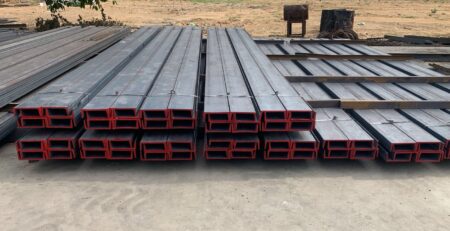
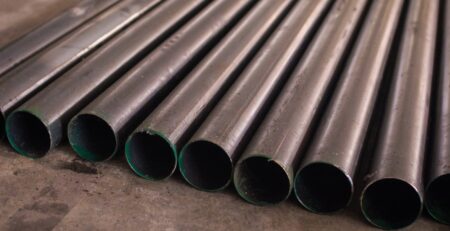
| Availability of Sections | Wide plates, angles, channels, beams | Limited range in-country |
| Third-Party Inspection | Routinely available | Less standardized |
The conclusion drawn from this Indian steel vs local Saudi steel comparison is clear: for projects demanding documented quality assurance and grade flexibility, Indian mild steel holds a consistent edge.

Performance in Saudi Arabia’s Toughest Applications
Mild Steel for Oil and Gas Projects KSA
The oil and gas sector demands steel that performs under extreme thermal conditions, high-pressure environments, and corrosive atmospheres. MS steel for oil and gas projects KSA requires provable material traceability, certified chemical compositions, and third-party inspection documentation all of which Indian exporters routinely provide through SGS, Bureau Veritas, and TÜV Rheinland.
Steel for Saudi Industrial Projects
Beyond oil and gas, steel for Saudi industrial projects including warehouses, processing plants, refineries, and manufacturing facilities requires large volumes of structural sections delivered to tight schedules. Indian suppliers, with their established export logistics networks and large mill capacities, are well-positioned to serve these requirements reliably.
Mild Steel for Saudi Construction
General mild steel for Saudi construction from residential and commercial developments to road infrastructure benefits from Indian supply chains that offer flexible order sizes, standard and custom section profiles, and fast turnaround from mill to port.
Compliance and Regulatory Credentials
SASO Approval and GCC Import Compliance
Saudi Arabia’s standards body, SASO (Saudi Standards, Metrology and Quality Organization), governs the quality of steel imported into the Kingdom. Reputable Saudi SASO approved steel suppliers from India maintain the relevant certifications and documentation to ensure smooth customs clearance and project approvals.
Indian Steel Compliance for GCC
Indian steel compliance for GCC markets goes beyond just SASO. Major Indian exporters align their documentation with the full spectrum of Gulf import requirements, including Mill Test Certificates (MTCs) with full traceability, third-party inspection reports, ASTM and IS grade equivalency documentation, and Certificates of Origin and Conformity.
Understanding Steel Import Regulations in Saudi Arabia
Understanding steel import regulations Saudi Arabia is essential for seamless procurement. Indian exporters experienced in the KSA market handle regulatory compliance proactively, ensuring that shipments arrive with complete documentation packages that satisfy both port authorities and project consultants.
Cost and Supply Chain Advantages
Competitive Steel Prices from India to KSA
One of the most compelling benefits of importing steel from India is pricing. Indian mills benefit from lower energy costs, economies of scale, and efficient raw material sourcing that together produce competitive steel prices India to KSA often 10–20% below equivalent locally sourced or European-origin material.
Bulk Mild Steel Supply for Saudi Arabia
For large-scale infrastructure projects, the ability to secure bulk mild steel supply Saudi Arabia from a single, reliable source simplifies procurement, reduces coordination complexity, and enables better price negotiation. Indian mills are geared for exactly this kind of volume-based supply relationship.
Indian Steel Logistics to Saudi Arabia
Indian steel logistics to Saudi Arabia are well-established. Key Indian ports including Mundra, Nhava Sheva, and Vizag have regular shipping connections to Dammam, Jubail, Jeddah, and Yanbu. Transit times are typically 14–20 days, enabling project teams to plan material arrivals with confidence.
Why Indian Supply Is the Most Cost-Effective Option
For buyers evaluating cost-effective steel suppliers Saudi, the Indian supply chain offers a combination of quality, documentation, and pricing that few alternatives can match across all three dimensions simultaneously.
Choosing the Right Indian Mild Steel Supplier for Saudi Projects
What to Look for in Indian Mild Steel Suppliers in Saudi Arabia
Not all exporters offer the same level of service and compliance. When evaluating Indian mild steel suppliers in Saudi Arabia, buyers should prioritize suppliers with BIS-certified manufacturing facilities, in-house or third-party quality testing labs, experience with SASO documentation requirements, established relationships with freight forwarders serving KSA ports, and references from past GCC project deliveries.
What Makes a Reliable Steel Exporter from India
Reliable steel exporters India differentiate themselves through transparency providing full mill traceability, offering pre-shipment inspection access, and maintaining consistent communication through the export process. These are the markers of a supplier equipped to support long-term project supply relationships rather than one-off transactions.
The Export Process: India to Saudi Arabia
The typical export process for steel exporters from India to Saudi Arabia involves order confirmation with grade and specification agreement, mill production scheduling, in-process and final quality inspection, documentation preparation (MTC, CoO, packing list, invoice), loading at an Indian port, and delivery at the nominated Saudi port of entry. A well-organized exporter manages each of these steps with minimal burden on the buyer.
The Best Mild Steel for Saudi Projects: Why Indian Origin Wins
When evaluated across quality, compliance, cost, availability, and logistics reliability, Indian mild steel for Saudi projects consistently outperforms local alternatives. The combination of large-scale manufacturing capability, internationally aligned quality standards, established export infrastructure, and competitive pricing makes Indian mild steel the pragmatic choice for KSA contractors and procurement teams.
Summary of Key Advantages
| Advantage | Indian Mild Steel | Local Saudi Alternatives |
| Grade Range & Availability | Broad, flexible | Limited |
| Quality Certifications | BIS, ASTM-equivalent, SASO-compliant | Variable |
| Pricing | Highly competitive | Often higher |
| Bulk Supply Capability | Large-volume ready | Capacity constraints |
| Logistics to KSA | Established, 10–14 day transit | No transit delay |
| Third-Party Inspection | Standard practice | Less consistent |
Conclusion
Saudi Arabia’s infrastructure ambitions demand materials that can perform at scale, meet international standards, and arrive on time and on budget. Indian mild steel for Saudi projects meets all of these requirements and in many cases, exceeds what local alternatives can realistically offer.
Whether the application is MS steel for oil and gas projects KSA, structural steel for Vision 2030 developments, or general mild steel for Saudi construction, Indian suppliers bring the quality credentials, compliance documentation, and logistics capability to deliver with confidence.
For procurement teams evaluating Indian mild steel suppliers in Saudi Arabia, the question is not whether Indian steel is good enough for KSA projects. The evidence strongly suggests it is the better choice.



Leave a Reply