
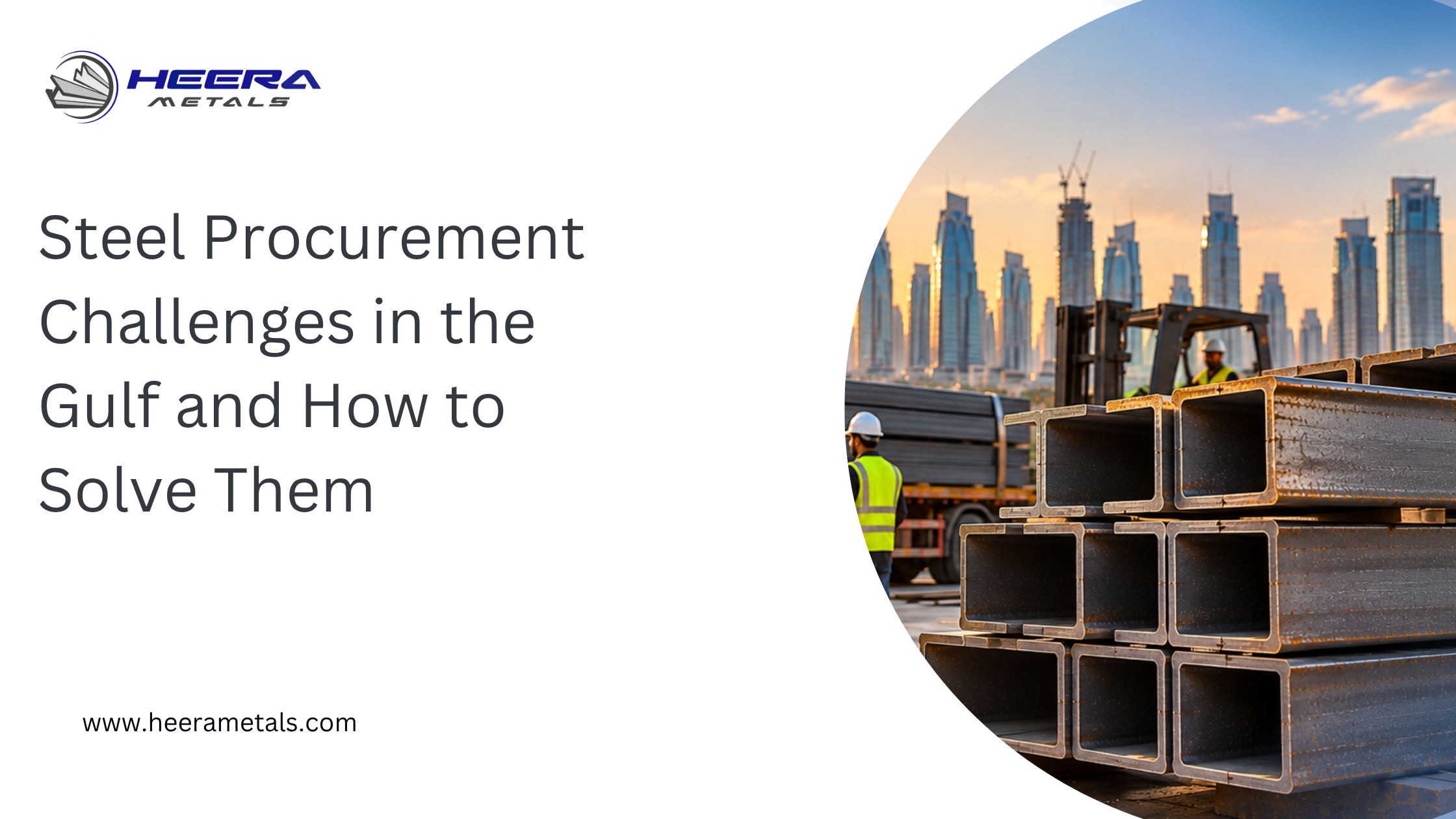
Steel Procurement Challenges in the Gulf and How to Solve Them
The biggest steel procurement challenges in the Gulf in 2026 are price and freight volatility, shipping and port disruption, dependence on imported raw materials and finished steel, strict quality and approval requirements, and documentation or delivery slippage. Most can be reduced with earlier ordering, shorter quotation validity, clear specifications, diversified sourcing, and a supplier who can document quality and manage logistics.
This guide explains each challenge facing steel buyers in the UAE, Saudi Arabia, and the wider Gulf, what the recent market evidence shows, and practical ways to solve them, including how to source structural steel and reinforcement from India with fewer surprises.
What Makes Steel Procurement Difficult in the Gulf?
The Gulf imports a significant share of the steel it uses, even though domestic mills are well established. That makes procurement sensitive to shipping routes, freight rates, raw material availability, and trade policy, on top of the usual issues of price and quality.
Demand is also large and project-driven. Saudi Arabia’s Deputy Minister of Industry and Mineral Resources has said construction mega-projects launched in recent years are worth more than 5 trillion riyals (about USD 1.33 trillion), most of them still in development . With demand concentrated in big programmes with fixed schedules, buyers have little room to absorb supply shocks.
| Challenge | Typical impact | Core solution |
| Price and freight volatility | Budget overruns, loss-making fixed-price contracts | Shorter quote validity, early commitment, cost-escalation clauses |
| Shipping and port disruption | Late cargo, rerouting, higher insurance | Phased shipments, alternative routing, buffer stock |
| Raw material and supply constraints | Tight availability, rising prices | Diversified sources, early forward planning |
| Quality and approval requirements | Rejected material, re-testing, delays | Frozen specifications, pre-approved certificates |
| Duties and trade policy changes | Changes in landed cost | Check duties at pricing and at shipment |
| Documentation and payment friction | Cargo held at port, delayed release | Standardised document checklists, clear terms |
Challenge 1: Price and Freight Volatility
Steel prices in the Gulf have been moving with freight and insurance as much as with mill pricing. A July 2026 analysis based on a China Arab Iron & Steel Association and Mysteel weekly report observed that increases in import quotes into the region were driven by the gap between FOB and CFR prices, which reflects freight and insurance, rather than production cost. It reported ocean freight on Middle East routes running 20% to 30% above April and May levels, and war-risk insurance on Strait of Hormuz transits rising from roughly 0.25% of insured vessel value to a range of 3% to 10% . Treat these as reported market figures from a trade-publisher analysis, not official statistics, and check current conditions.
Gulf mills have shown more price stability. Emirates Steel was reported to have held its rebar price unchanged for October production, the third consecutive monthly rollover.
How to Solve It
- Shorten quote validity. When freight moves weekly, a 30-day price carries real exposure. Ask suppliers for clear validity periods and re-confirm before ordering.
- Understand the price basis. Compare FOB, CFR, and CIF quotes like for like, and see who carries freight, insurance, and war-risk premiums.
- Commit early on critical packages. Lock volumes and prices for items that drive the programme.
- Add escalation or review clauses in subcontracts where the contract allows, so cost swings are shared rather than absorbed by one party.
- Compare local and imported supply for reinforcement and other long products, since local mill pricing can behave differently from import pricing.
Challenge 2: Shipping, Port, and Route Disruption
Once a cargo is on the water, route risk becomes a procurement risk. In April 2026, the chief executive of Arabian Gulf Steel Industries told Fastmarkets that logistics disruption, sharply higher freight, and limited raw material supply were affecting the regional market, and that Jebel Ali had effectively become non-operational for steel imports according to market sources. Conditions have changed since, and may change again, so confirm current port and route status before you plan shipments.
How to Solve It
- Plan with realistic lead times. Build clearance, possible rerouting, and inspection into the programme, not just sailing time.
- Phase deliveries. Several smaller shipments reduce the impact of any one delayed vessel.
- Ask about routing options. Discuss discharge port alternatives and inland transport with your supplier and freight forwarder.
- Insure appropriately. Agree who arranges cargo insurance and who bears war-risk or additional premiums, and put it in the purchase order.
- Keep a modest buffer of critical sizes and grades on site or in a nearby yard when storage allows.
Challenge 3: Raw Material Constraints and Supply Concentration
Gulf mills depend on imported inputs. A Fastmarkets report from the spring of 2026 said steel supply chains in the Gulf remained severely disrupted, with raw material shortages and high freight costs pushing rebar prices sharply higher in Saudi Arabia and the UAE, and mills shifting toward scrap and pushing scrap to record highs .
Sources are also shifting. The same July analysis reported record Omani steel exports to the UAE as regional producers take share from longer-haul imports .
How to Solve It
- Diversify supply. Combine domestic, intra-GCC, and imported sources, such as Indian mills, instead of relying on one route.
- Qualify more than one supplier per critical product before you need them.
- Plan earlier for scarce items such as particular sizes, heavy sections, and special grades.
- Track market signals such as mill price announcements and freight trends, and share them with project teams.
Challenge 4: Quality, Specifications, and Approvals
The Gulf has demanding technical and approval requirements, and a rejected shipment costs more time than almost any other problem. For reinforcement, Dubai Municipality’s Dubai Central Laboratory Department runs a certification scheme under which approved factories mark bars to standards such as BS 4449 B500B . Structural steel is often specified to grades such as IS 2062 E250, which has a minimum yield of 250 MPa for thicknesses up to 20 mm .
How to Solve It
- Freeze the specification before ordering, including grade, size, length, and standard.
- Confirm equivalence in writing if an alternative standard is proposed, and get consultant approval.
- Agree the certificate format and testing requirements up front.
- Verify on arrival. Check markings, dimensions, unit weights, and certificates against the order.
- Use third-party inspection where the specification requires it.
Challenge 5: Duties and Trade Policy
Trade measures change landed cost and sometimes sourcing choices. The UAE has applied a 10% customs duty on rebar and wire rod, with the latest extension running until 12 October 2026. Buyers should confirm whether it has been renewed. Other duties, quotas, and conformity requirements vary by product and country, and Saudi Arabia and the UAE do not have identical rules.
How to Solve It
- Check duties twice: when pricing and again before shipment.
- Ask the supplier or customs agent for the HS code and applicable duty for each product.
- State responsibility for duties and clearance in the contract (for example, DDP or customer-cleared terms).
Challenge 6: Documentation, Payment, and Clearance
Paperwork errors are one of the most avoidable causes of delay. Missing or inconsistent certificates, invoices, or packing lists can hold cargo at port even when the steel is perfect.
How to Solve It
- Use a standard document checklist: mill test certificates, packing list, commercial invoice, bill of lading, and inspection reports.
- Check documents before shipment, not after arrival.
- Agree payment and delivery terms clearly, including who clears the cargo and who pays for storage if clearance is delayed.
Sourcing Steel From India: Reducing Risk
India is a major steel producer with a wide range of beams, channels, angles, plates, and bars. Indian mills roll standard sections such as ISMB, ISMC, and ISA regularly , which helps with availability for Gulf projects.
To reduce risk on Indian supply:
- Confirm the grade, standard, and acceptance with the consultant before production.
- Request batch-linked mill test certificates and agree third-party inspection if needed.
- Check export packing for sea freight, with clear bundle marking.
- Agree shipment phasing, discharge port, and insurance terms in writing.
- Monitor route and port conditions with your forwarder as shipment dates approach.
A Practical Procurement Checklist for Gulf Projects
- Define specifications and approvals before enquiry.
- Build the programme backwards from erection or pour dates.
- Request quotations on identical specifications, terms, and validity.
- Qualify at least two suppliers for critical items.
- Confirm duties, conformity requirements, and clearance responsibility.
- Phase shipments and plan buffer stock for critical sizes.
- Pre-check documents and verify materials on arrival.
Frequently Asked Questions
What are the main steel procurement challenges in the Gulf?
Price and freight volatility, shipping and port disruption, raw material constraints, quality and approval requirements, duty changes, and documentation delays.
How can I manage steel price fluctuations in the Gulf?
Use shorter quote validity, compare pricing bases like for like, commit early on critical items, and consider escalation clauses where contracts allow.
How do I avoid steel supply delays in the UAE?
Order early, freeze specifications, pre-clear documents, phase deliveries, qualify more than one supplier, and keep a buffer of critical items.
Is it better to buy steel locally or import it?
It depends on the product, quantity, timing, and price. Local and intra-GCC mills can offer shorter delivery for some products, while imports from sources such as India widen the range of sizes, grades, and volumes. Many projects combine both.
Does shipping disruption affect steel from India?
It can, because route risk, freight, and insurance affect any seaborne cargo into the Gulf. Phased shipments, realistic lead times, and clear insurance terms help manage it.
What documents are needed to import steel into the UAE?
Typically a commercial invoice, packing list, bill of lading, mill test certificates, and any inspection or conformity documents the project or authority requires. Confirm the current list with your customs agent.
How do I choose a steel supplier for Gulf projects?
Look for documented quality, relevant product range, bulk capacity, logistics experience, clear terms, and reliable communication, not just the lowest price.
Conclusion
Steel procurement in the Gulf is harder when freight, insurance, raw materials, and trade conditions change quickly. The practical answer is discipline: freeze specifications, order early, shorten price validity, diversify suppliers and routes, check duties and approvals, and verify documents before shipment. Buyers who treat procurement as risk management usually protect both the programme and the budget.
Contractors, developers, and procurement teams looking for structural steel, plates, bars, or sections for UAE and Gulf projects can share their requirements with Heera Metals to discuss lead times, documentation, and export supply from India.








Leave a Reply