
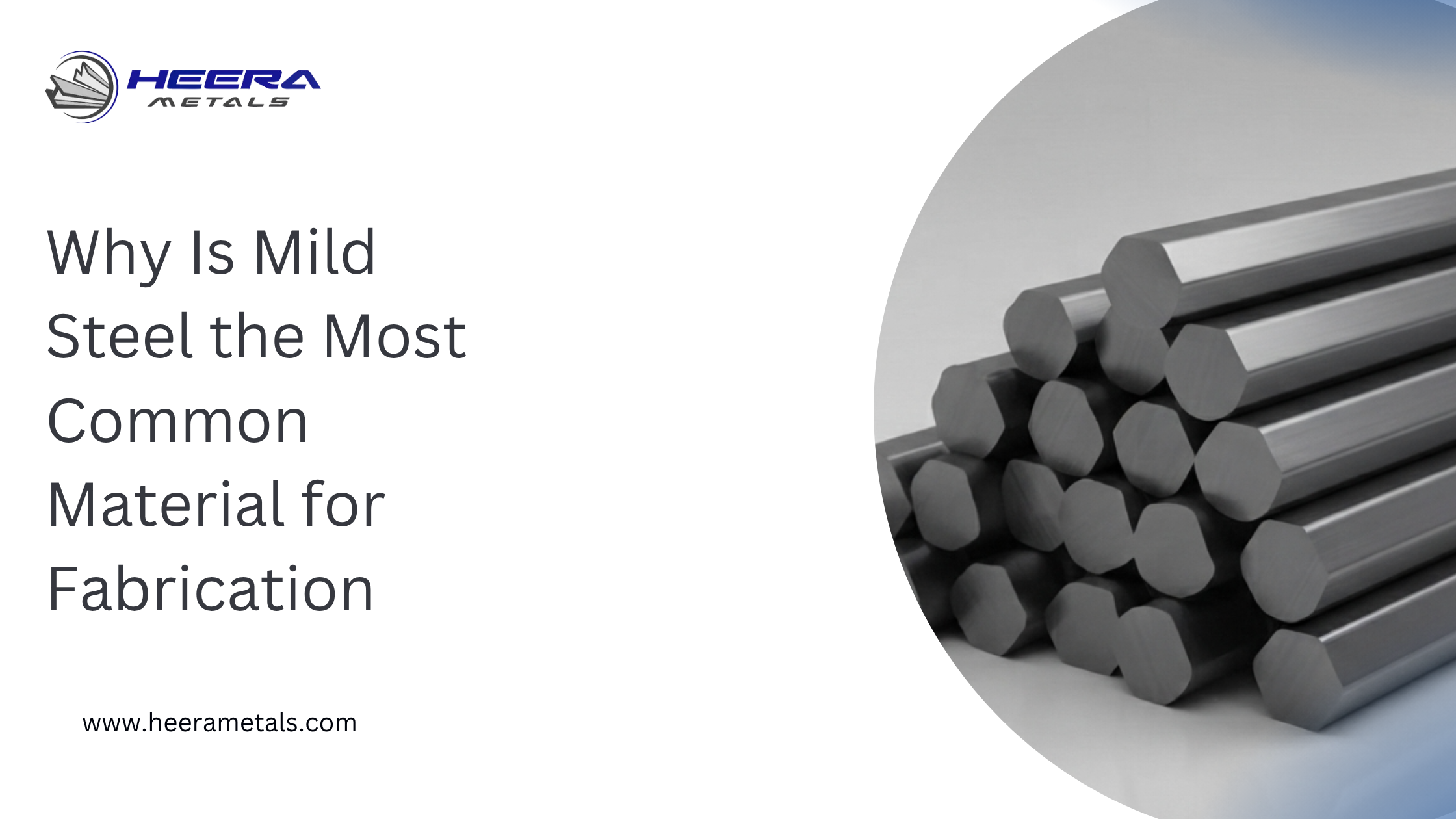
Why Is Mild Steel the Most Common Material for Fabrication?
Every fabrication project begins with one critical decision: selecting the right material. Whether the end product is a structural frame, industrial machine component, storage tank, support structure, or construction assembly, the chosen material directly impacts performance, manufacturing efficiency, and project cost.
Among the many metals available to fabricators, mild steel continues to dominate the market. Despite advances in stainless steel, aluminum alloys, and engineered metals, mild steel remains the preferred material across construction, manufacturing, engineering, and industrial fabrication sectors.
Its popularity is not driven by a single advantage but by a combination of affordability, strength, versatility, and ease of processing. These qualities allow fabricators to produce durable components while maintaining cost efficiency, making mild steel one of the most practical materials available for modern industry.
The Balance Between Strength and Affordability
One of the primary reasons mild steel has become the industry’s preferred fabrication material is its exceptional balance between performance and cost.
Many engineering materials offer superior corrosion resistance or higher tensile strength, but they often come with significantly higher procurement and processing costs. Mild steel provides sufficient structural strength for most fabrication applications without creating unnecessary expenses.
For manufacturers operating in competitive industries, this balance is extremely valuable. It allows companies to maintain product quality while controlling production budgets, which is why mild steel continues to be widely used in both small-scale fabrication workshops and large industrial manufacturing facilities.
Excellent Weldability Simplifies Fabrication
Fabrication often involves joining multiple components to create larger structures or finished products. Materials that are difficult to weld can increase labor costs, extend production timelines, and create quality control challenges.
Mild steel is known for its excellent weldability. Because it contains relatively low levels of carbon, it can be welded efficiently using common fabrication processes while maintaining structural integrity.
This characteristic makes mild steel particularly attractive for industries that rely heavily on structural fabrication. Whether fabricating support structures, machinery frames, industrial platforms, or construction assemblies, manufacturers can achieve strong and reliable welds without complex processing requirements.
As a result, fabrication companies can complete projects faster while maintaining consistent quality standards.
Easy Machining Improves Manufacturing Efficiency
Another reason mild steel is so widely used is its excellent machinability.
During fabrication, materials frequently undergo cutting, drilling, milling, turning, and shaping operations. Mild steel responds well to these processes, allowing manufacturers to create precise components with minimal difficulty.
This ease of machining helps reduce tool wear, improve production speeds, and lower manufacturing costs. For businesses focused on operational efficiency, these advantages can significantly impact overall productivity.
The ability to process mild steel quickly and accurately contributes to its widespread adoption across engineering and manufacturing industries.
Adaptability Across Multiple Industries
Few materials offer the level of versatility provided by mild steel.
In construction, it is used to fabricate structural frameworks, support systems, and reinforcement components. In manufacturing facilities, it forms the basis of machinery, equipment structures, and production systems. Infrastructure projects utilize mild steel for bridges, utility structures, and transportation networks, while industrial facilities rely on fabricated steel components for daily operations.
This adaptability means fabricators can use the same material across a wide variety of applications, simplifying procurement and reducing material management complexity.
Because mild steel performs reliably in such diverse environments, it has become a universal solution for fabrication projects.
Why Fabricators Prefer Mild Steel Over Alternative Materials
Although stainless steel and aluminum offer specific advantages, they are not always the most practical choice.
Stainless steel provides excellent corrosion resistance but generally involves higher material and fabrication costs. Aluminum offers reduced weight but may require specialized welding techniques and additional engineering considerations.
Mild steel occupies a unique position between these materials. It provides the structural performance required for most fabrication applications while remaining economical and easy to process.
For projects where strength, fabrication efficiency, and cost control are primary concerns, mild steel often delivers the best overall value.
The Role of Mild Steel in Modern Infrastructure and Manufacturing
The continued growth of infrastructure and industrial development has reinforced the importance of mild steel fabrication.
Warehouses, factories, transportation systems, commercial buildings, energy facilities, and engineering projects all depend on fabricated steel components. The ability of mild steel to meet demanding structural requirements while remaining cost-effective makes it an essential material in these sectors.
As industries continue to expand and modernize, the demand for fabricated mild steel products remains strong because the material consistently supports efficient manufacturing and dependable structural performance.
Conclusion
Mild steel remains the most common material for fabrication because it successfully combines the qualities that manufacturers and engineers value most: strength, affordability, weldability, machinability, and versatility.
Rather than excelling in only one area, mild steel provides balanced performance across every stage of the fabrication process. It is easy to source, simple to work with, cost-effective to manufacture, and capable of supporting a wide range of industrial, construction, and engineering applications.
For businesses seeking a reliable material that delivers long-term value without excessive costs, mild steel continues to be the benchmark against which other fabrication materials are measured.


Leave a Reply