
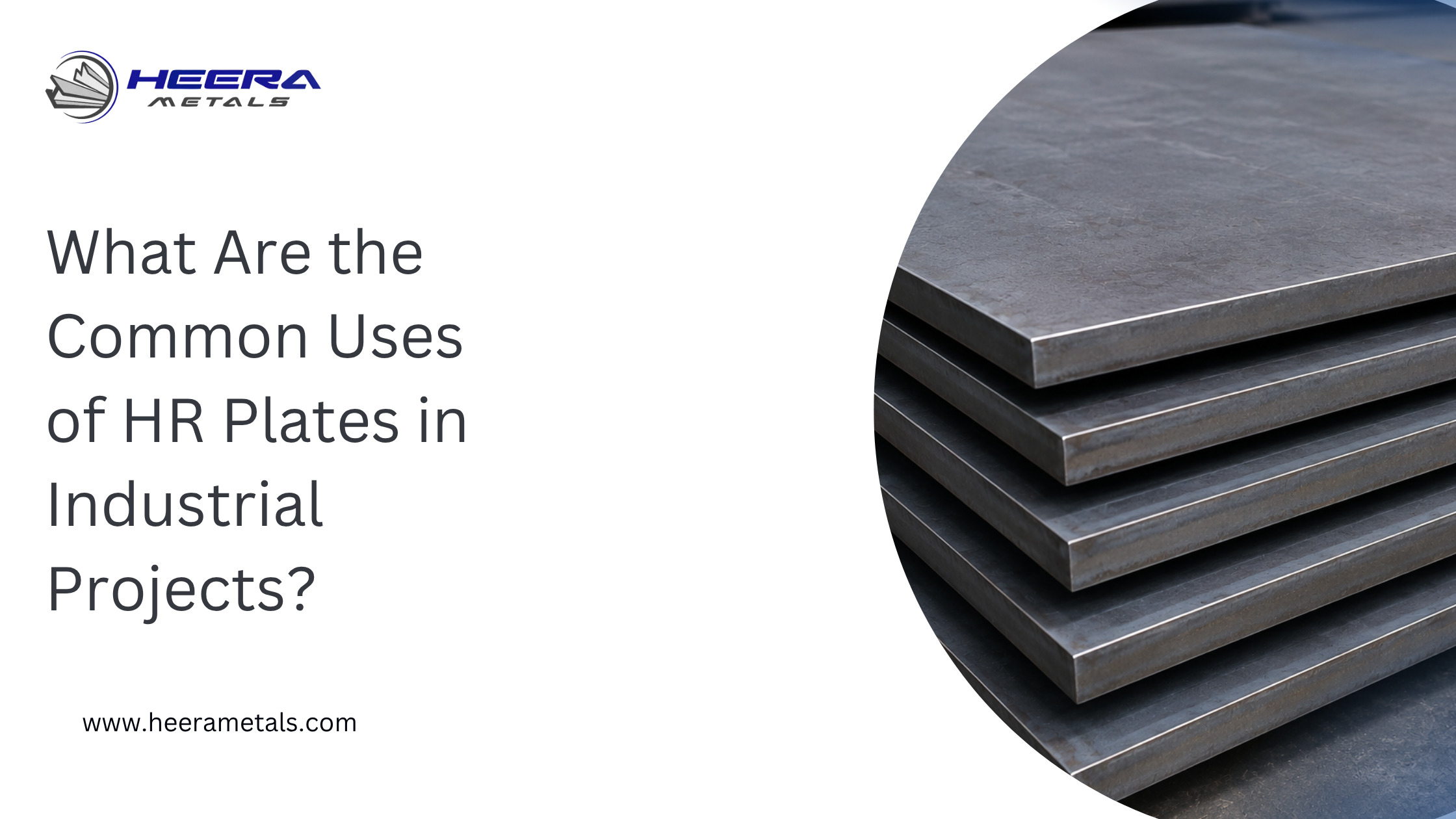
What Are the Common Uses of HR Plates in Industrial Projects?
Introduction
Some steel products stay behind the scenes, buried inside a machine frame or bolted beneath a structure where nobody thinks to look. HR plates fall into that category more often than not.
Hot rolled steel plates are among the most heavily used materials in industrial fabrication, combining thickness, strength, and weldability in a way few other products can match. They show up in shipbuilding, heavy machinery, pressure vessels, and structural frameworks, often doing the quiet work of holding a project together.
This article looks at where hr plates get used across industrial projects, why fabricators reach for them so often, and what to check before ordering them for a large scale build.
What Sets HR Plates Apart
Hot rolled plates are produced by rolling steel slabs at high temperature, then cutting them into flat sections thicker than standard sheet or coil products. That extra thickness is what defines a plate rather than a sheet.
Because the rolling happens above the steel’s recrystallization temperature, the finished plate has a more uniform grain structure and fewer internal stresses than cold formed alternatives, which translates directly into better weldability and easier machining down the line.
Fabricators also value hr steel plates for their dimensional flexibility. Mills can produce them in a wide range of thicknesses and widths, which makes it easier to match a plate to a specific structural or mechanical requirement without excessive cutting or waste.
| Thickness Range | Typical Application | Common Industry |
| 5 mm to 12 mm | Machinery housings, light structural components | General fabrication |
| 12 mm to 25 mm | Structural base plates, gusset connections | Construction and infrastructure |
| 25 mm to 50 mm | Pressure vessels, storage tanks | Oil, gas, and chemical processing |
| 50 mm and above | Ship hulls, heavy machinery frames | Shipbuilding and heavy engineering |
Where HR Plates Show Up in Industrial Projects
Heavy Machinery and Equipment Frames
Cranes, excavators, and industrial presses all rely on thick steel plates to form base frames and load bearing components. The plate needs to absorb repeated stress and vibration without fatiguing, which is exactly where hot rolled steel earns its reputation.
Shipbuilding and Marine Structures
Ship hulls, decks, and bulkheads are built almost entirely from steel plates chosen for their strength and resistance to continuous mechanical load. Thicker gauge hr plates handle the pressure and impact that marine environments demand.
Pressure Vessels and Storage Tanks
Tanks holding liquids, gases, or industrial chemicals need plates that can be welded into a fully sealed structure without weak points. Hot rolled plates are a common choice here because their grain uniformity reduces the risk of weld cracking under pressure.
Structural and Bridge Construction
Large infrastructure projects, including bridges and industrial buildings, use hr plates for base plates, gusset connections, and other load transferring components where flat, thick steel is required.
Railway and Heavy Transport Equipment
Rail cars, wagons, and heavy transport chassis often incorporate steel plates for their underframes, since the material needs to withstand repeated mechanical stress over long service periods without deforming.
Industrial Machinery Housings
Plates also get used to fabricate protective housings and enclosures for industrial equipment, where impact resistance matters more than weight savings.
Why Fabricators Choose Hot Rolled Plates So Often
Cost efficiency plays a large role, since hot rolled plates are generally more affordable than cold formed or specialty alloy plates, which matters significantly on projects that consume large tonnages of steel.
Weldability is another major factor. Because the internal grain structure is more consistent, welders encounter fewer cracking issues and get smoother joints compared to some cold worked alternatives.
Availability also works in favor of hr plates. Since they are produced in high volume across most steel mills, sourcing consistent quantities for large projects tends to be easier than tracking down specialty plate products.
Finally, hot rolled plates handle a wide thickness range well, from a few millimeters up to several inches, giving engineers flexibility to specify exactly what a project needs without switching material types partway through.
Choosing the Right HR Plate for Your Project
Grade selection matters more than most buyers initially assume. A plate meant for structural framing does not always suit a pressure vessel, since chemical composition and mechanical properties shift between grades.
Thickness tolerance is worth confirming directly with the mill or supplier, particularly for projects where precise fit and weld preparation depend on consistent plate dimensions.
Surface condition matters too, especially for projects requiring additional coating or painting after fabrication, since leftover scale can affect how well a coating adheres.
Working with an established hr plate supplier in India gives many international buyers an advantage here, since the country’s large production base tends to offer more consistent availability across common grades and thicknesses.
For projects located near major ports, sourcing from a hot rolled plate exporter based in Gujarat can also simplify logistics, given the region’s direct shipping access to markets across the Middle East, Africa, and Southeast Asia.
Buyers working on infrastructure projects overseas often find that a steel plate exporter with experience shipping to Africa and the Middle East offers more reliable documentation and delivery timelines than a supplier handling that route for the first time.
Common Mistakes to Avoid
Ordering plates without confirming grade certification is one of the more expensive mistakes fabricators make, since mismatched mechanical properties can compromise structural integrity in ways not visible until the project is already underway. Overlooking thickness tolerance is another frequent issue, particularly on projects requiring tight fit ups during welding.
Choosing a supplier based purely on unit price, without checking delivery reliability or documentation practices, tends to backfire on larger orders where one delayed shipment can stall an entire project.
Final Thoughts
Hot rolled steel plates remain a foundation material across heavy industry, delivering strength, weldability, and cost efficiency in a single package. Whether the end use is a machine frame, a ship hull, or a structural connection, hr plates give fabricators a dependable starting point that adapts to demanding conditions.
If your next project depends on a steady supply of quality hot rolled plates, working with an experienced supplier who understands grades, thicknesses, and export requirements can prevent costly delays down the line. Reach out to discuss the right hr plate specification for your industrial project.


Leave a Reply