
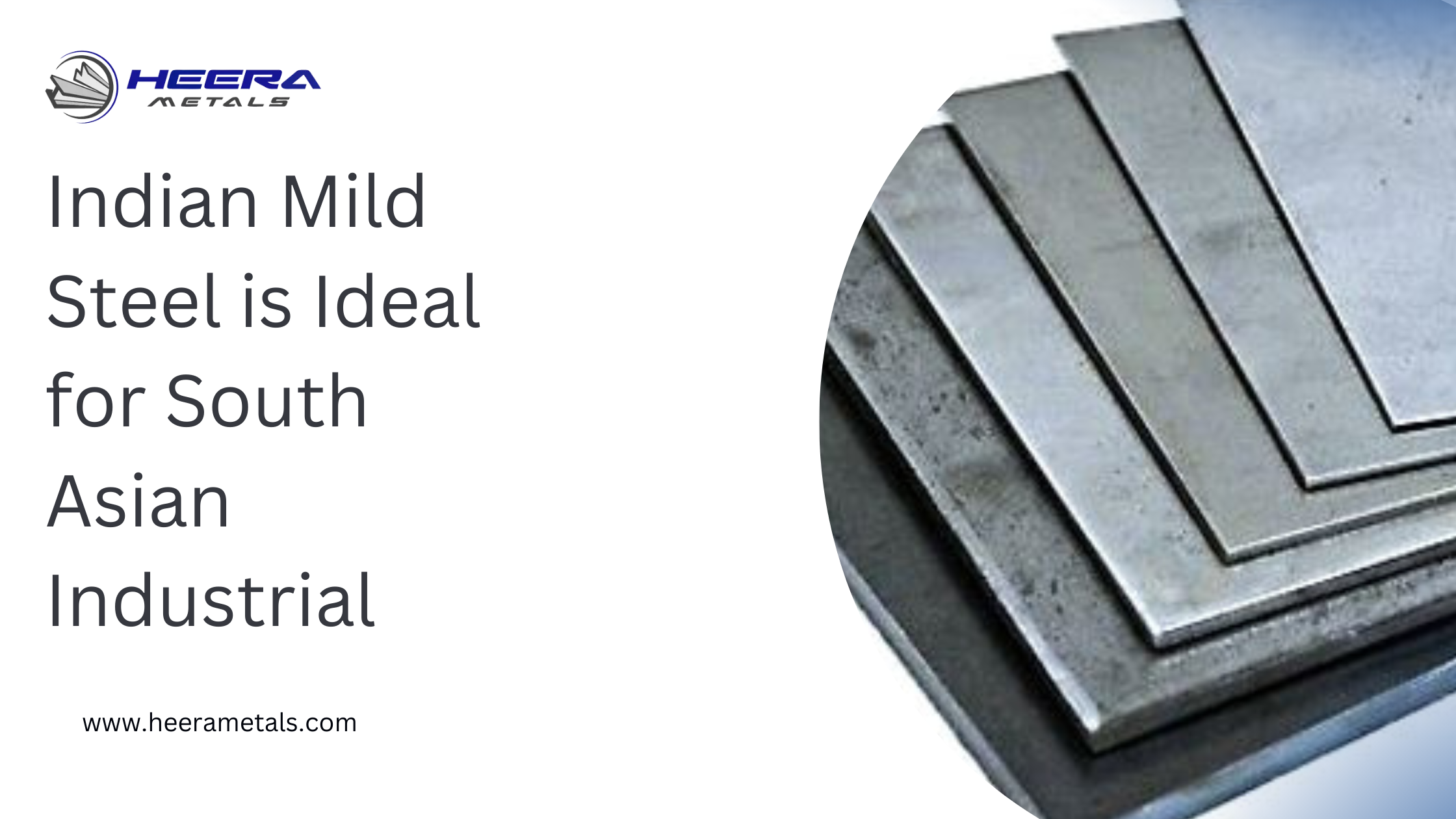
Why Indian Mild Steel is Ideal for South Asian Industrial Projects
In South Asia’s booming industrial landscape, mild steel from India shines as the top choice for construction, manufacturing, and infrastructure. Known for ductility, weldability, and affordability, Indian mild steel suits diverse climates and demands from Mumbai skyscrapers to Bangladesh bridges. Indian steel suppliers offer superior strength via low carbon content, easy fabrication, and standards like IS 2062.
Indian mild steel excels due to its local supply chain from local mines. It cuts costs by 20-30% versus Chinese or European imports, slashing duties and delays for projects.
India Steel Market Growth Projection (2025–2030)
The market is projected to grow from USD 102.67 Billion in 2024 to USD 166.96 Billion by 2030 at a Compound Annual Growth Rate (CAGR) of 8.28%.
| Year | Market Value (USD Billion) | Production Volume (MT – Estimated) | Key Growth Drivers |
|---|---|---|---|
| 2024 | $102.67 | ~145 | Current Infrastructure Boom |
| 2025 | $111.17 | ~158 | Rise in Automotive Manufacturing |
| 2026 | $120.37 | ~173 | National Steel Policy Expansion |
| 2027 | $130.34 | ~189 | Smart Cities & Urbanization |
| 2028 | $141.13 | ~206 | High-Speed Rail & Metro Projects |
| 2029 | $152.82 | ~225 | Shift to Green Steel & Hydrogen |
| 2030 | $166.96 | 230+ | Target: 300 MT Capacity |
Role of Mild Steel in South Asian Industrial Development
steel for south Asian industrial growth because it is strong, cheap, and flexible. As countries in the region build up their manufacturing, logistics, and infrastructure, mild steel is still the main material that supports large-scale, cost-sensitive industrial growth.
Importance of Mild Steel in Factories, Warehouses, and Infrastructure
People often use mild steel to make structural frameworks, roofs, columns, beams, and flooring supports in factories and warehouses. It’s great for industrial sheds, storage facilities, power plants, and transportation infrastructure like bridges and rail components because it can hold a lot of weight and lasts a long time. Mild steel is cheap, so developers can make projects bigger without putting the safety of the building at risk.
Common Applications Across South Asian Projects
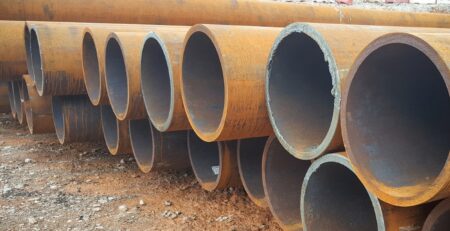
In South Asian industrial projects, mild steel is often used to make industrial buildings, machinery bases, conveyor systems, storage racks, pipelines, transmission towers, and parts for cars and engineering. Its adaptability makes it useful for both large infrastructure projects and small manufacturing units, meeting a wide range of industrial needs in urban and semi-urban areas.
Preference for Versatile and Easy-to-Fabricate Steel Grades
Mild steel is preferred because it is easy to work with, weld, cut, and shape, which fits well with the fast-paced building schedules and different site conditions in South Asia. Contractors and fabricators like mild steel grades because they are easier to work with, cost less in labor, and can be changed on the job site. This makes them very useful for industrial projects with changing design needs.
Consistent Quality & International Standards Compliance
For industrial and infrastructure projects where safety and long-term performance are not up for debate, consistent quality is very important. Mild steel in South Asian projects is becoming more and more made to meet internationally recognized standards, which makes it reliable for a wide range of uses and operating conditions.
Compliance with Standards
Mild steel manufactured to ASTM, IS, BS, and EN standards meets strict requirements for strength, composition, and dimensional accuracy. This standards compliance ensures seamless integration into global engineering designs, facilitates approvals from consultants and regulatory bodies, and allows projects to maintain uniform quality across local and international supply chains.
Wide Range of Mild Steel Products for Industrial Use
To meet the needs of different industrial and infrastructure projects, a wide range of mild steel products is necessary. Engineers, fabricators, and contractors can choose the best material for both structural performance and fabrication efficiency because there are many different types of products available.
Structural Steel, Plates, Angles, Channels, and Beams
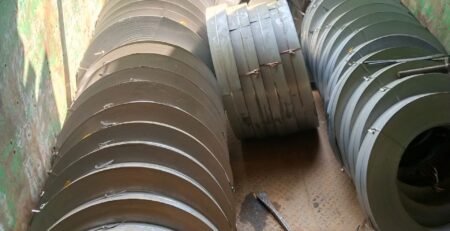
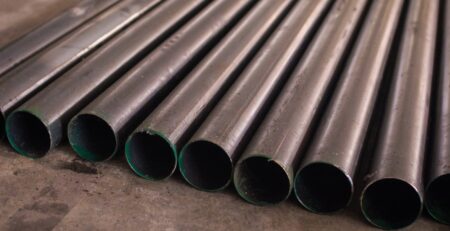
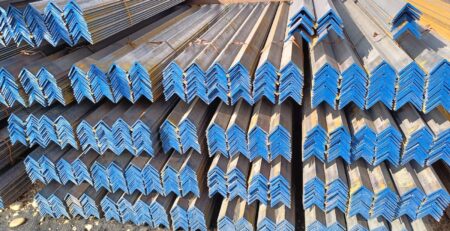
Mild steel comes in many shapes, including plates, angles, channels, and beams. Each shape is made for a different purpose, like carrying loads or making things. These items are used a lot in warehouses, industrial buildings, machinery foundations, platforms, and support structures because they are strong, stable, and can be designed in many ways.
Custom Sizes and Fabrication-Ready Formats
Custom sizes and formats that are ready to be made help cut down on waste and time spent processing on site. Pre-cut lengths, custom thicknesses, and precision-rolled sections speed up assembly, make sure that parts fit together better, and make fabrication workflows more efficient, especially for big or time-sensitive industrial projects.
Conclusion
Mild steel continues to be a strategic material for South Asia by offering the right balance between performance and affordability. As industrial and infrastructure projects grow in scale and complexity, selecting steel that aligns with budget constraints, quality expectations, and supply timelines becomes essential for sustainable development.
Balancing Cost, Quality, and Supply Reliability
A good steel supply strategy must find a balance between low prices, high quality, and reliable availability. Mild steel meets these needs by being affordable and providing structural reliability. Stable supply chains help projects avoid delays, price changes, and interruptions during execution.
Indian Mild Steel Fits South Asia’s Industrial Growth
Indian mild steel is a good fit for South Asia’s industrial growth because it has high quality standards, can be made in large quantities, and is easy to trade with other countries in the region. It meets international standards and is easy to work with, making it a good choice for factories, warehouses, transportation infrastructure, and energy projects all over the region.


Leave a Reply