
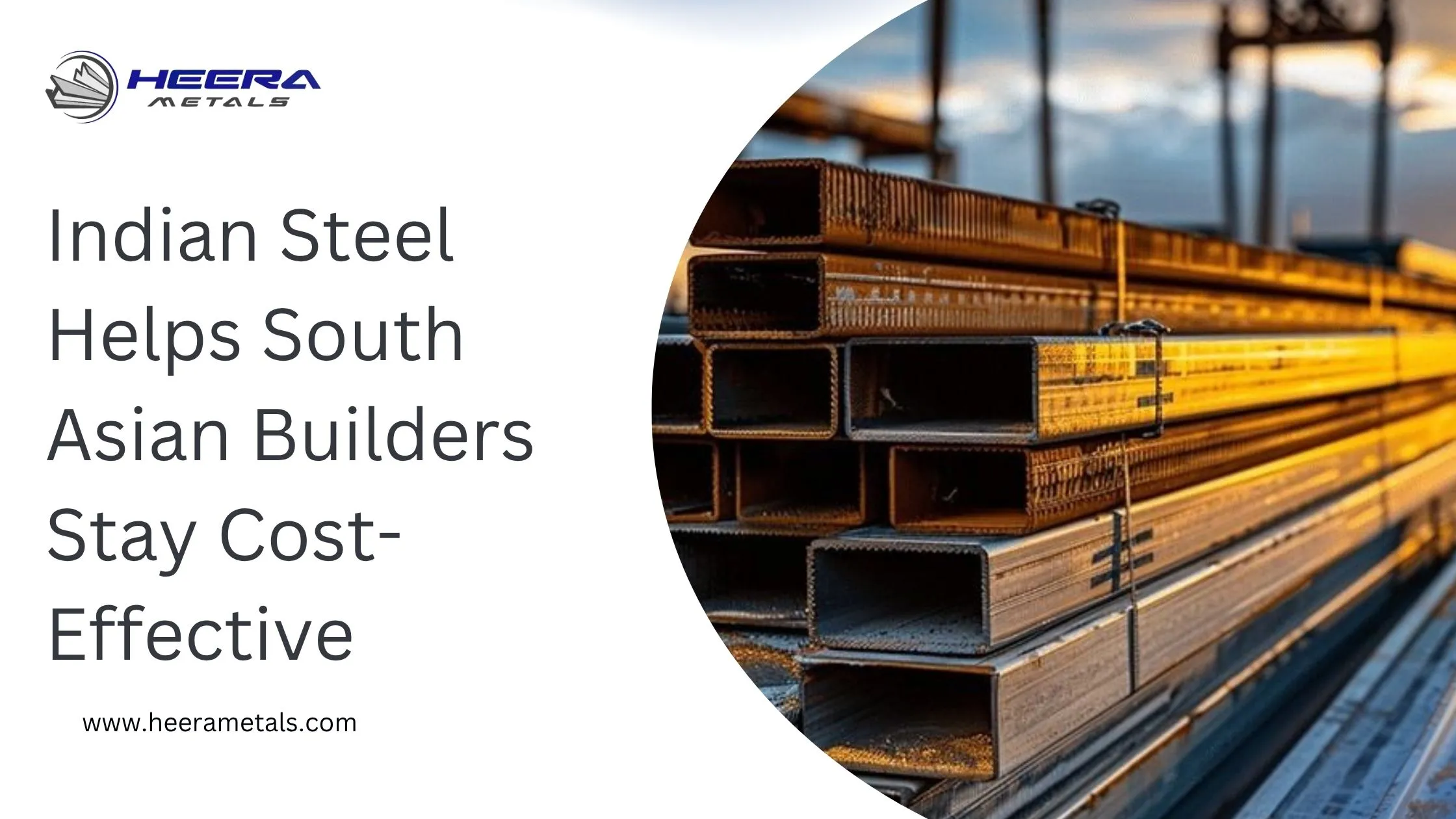
How Indian Steel Helps South Asian Builders Stay Cost-Effective
Construction across South Asia is accelerating. From housing projects in Bangladesh to road infrastructure in Nepal and commercial developments in Sri Lanka, the region is building at a pace that demands reliable, affordable, and high-quality materials. For builders navigating tight budgets without compromising structural integrity, Indian steel for South Asian builders has emerged as the most practical and competitive supply choice available.
This blog breaks down exactly how and why Indian steel gives South Asian builders a measurable cost and quality advantage and what to look for when choosing a supplier.
The Cost Pressure South Asian Builders Face
Construction margins across South Asia are under consistent pressure. Rising labor costs, fluctuating currency exchange rates, and unpredictable local material pricing make procurement one of the most critical levers builders can control. When steel, often the single largest material cost on a structural project, is priced competitively without sacrificing quality, it changes the entire economics of a build.
Why Local Steel Sources Often Fall Short
In many South Asian markets, local steel production cannot meet demand at scale. Nepal, Bangladesh, and Sri Lanka all have domestic steel capacity, but output is limited, grade variety is narrow, and prices are often elevated due to the cost of importing raw materials locally before re-rolling. This structural gap in supply makes Indian steel exports to South Asia not just an option but a practical necessity for builders working at any meaningful volume.
The Case for Sourcing Steel from India
India shares borders or close maritime proximity with every major South Asian market. Its steel industry is the world’s second-largest by output, producing over 125 million metric tons annually. This combination of geographic advantage and industrial scale makes cost-effective Indian steel consistently accessible to builders across the region at prices that local producers simply cannot replicate.
Why Indian Steel Prices Work in South Asia’s Favour
India’s Manufacturing Cost Advantage
Indian steel price advantage stems from several structural factors. Indian mills benefit from low-cost domestic iron ore, coal, and energy inputs. Large integrated steel plants operate at efficiencies that reduce per-tonne production costs significantly. These savings flow directly through to export pricing, giving buyers access to the best steel prices from India that are routinely 15–25% below equivalent European or East Asian origin material.
Competitive Pricing Without Compromising Grade
A common concern among buyers new to Indian steel is whether lower prices reflect lower quality. They do not. Low-cost steel for builders from India is produced to Bureau of Indian Standards (BIS) specifications that are technically aligned with international benchmarks. The price advantage comes from production efficiency and raw material access, not from cutting corners on material performance.
Bulk Orders Drive the Best Value
For builders managing large projects, the ability to place bulk steel supplies at competitive rates from a single Indian source unlocks further savings through volume pricing, consolidated freight, and simplified logistics. Indian mills are structured for high-volume export and offer pricing tiers that reward consistent buyers, a genuine advantage for developers and contractors running multiple projects simultaneously.
Indian Steel Quality What South Asian Builders Can Expect
BIS -Certified Steel from India
All reputable Indian steel exporters supply BIS certified steel India meaning every product batch is manufactured and tested under a nationally enforced quality framework. BIS certification covers chemical composition, yield and tensile strength, elongation, and dimensional tolerances. For builders, this translates to predictable material performance that supports safe, compliant structural design.
Indian Steel Quality Standards vs. Regional Alternatives
Indian steel quality standards under IS 2062 (structural steel) and IS 1786 (TMT reinforcement bars) are technically comparable to international grades used as the reference point for construction specifications across South Asia. When a project specification calls for a particular grade of structural or reinforcement steel, Indian-origin supply can meet that specification with full documentation something not all regional suppliers can consistently provide.
High-Strength and Durable Options for Every Application
Whether the requirement is durable mild steel for construction of residential frames, high-strength Indian steel for industrial structures, or Indian TMT bars for builders working on reinforced concrete projects, Indian mills produce the full range. Fe415, Fe500, and Fe550 TMT grades cover the spectrum from standard residential construction to high-load infrastructure applications.
Steel Products South Asian Builders Rely On
Indian structural steel for builders including MS plates, angles, channels, I-beams, and H-sections is produced to IS 2062 specifications and available in a wide range of sizes and thicknesses. For builders constructing commercial frames, industrial sheds, bridges, or multi-storey structures, this product range offers design flexibility at competitive price points.
Mild Steel for South Asian Construction
Mild steel for South Asian construction remains the workhorse of the building industry across the region. Its weldability, machinability, and cost profile make it the default choice for structural applications where ultra-high tensile requirements are not specified. Indian mild steel supply is consistent, well-documented, and readily available in the volumes builders need.
Indian TMT Bars for Builders
TMT (Thermo-Mechanically Treated) bars are the backbone of reinforced concrete construction across South Asia. Indian TMT bars for builders in Bangladesh, Nepal, and Sri Lanka are widely used due to their superior ductility, earthquake resistance, and corrosion-resistant properties all at import prices that compare favourably with locally produced alternatives.
Export Routes How Indian Steel Reaches South Asia
Nepal imports the majority of its construction steel. Indian steel exporters to Nepal supply via land routes through key border crossings including Raxaul-Birgunj and Jogbani-Biratnagar, making turnaround from Indian mills to Nepali construction sites among the fastest in the region often under a week for stocked material.
Reliable Steel Manufacturers India
Working with reliable steel manufacturers India means having access to a supply chain that can adapt managing urgent orders, adjusting product mix, and maintaining delivery schedules even as project requirements evolve. Established Indian exporters with dedicated export divisions serve this need consistently across all major South Asian corridors.
How Indian Steel Helps Builders Reduce Construction Costs
Reduce Construction Cost with Indian Steel
The direct route to cost reduction is straightforward: reduce construction cost with Indian steel by replacing higher-priced local or import alternatives with BIS-certified Indian supply at competitive per-tonne prices. For a mid-sized residential project consuming 200–500 tonnes of steel, a 15% price saving translates directly to hundreds of thousands of rupees, taka, or rupees retained in the project budget.
Budget-Friendly Construction Materials Without the Trade-Offs
Budget-friendly construction materials from India do not require builders to accept inferior quality, limited grade options, or unreliable supply. The Indian steel export ecosystem is mature, with multiple competitive suppliers, established freight networks, and standardized documentation giving buyers both price efficiency and procurement confidence.
Affordable Steel for Construction at Every Project Scale
Whether the project is a single residential building or a large commercial or infrastructure development, affordable steel for construction is available from Indian sources at appropriate volumes. Indian suppliers serve small traders, medium contractors, and large developers with flexible minimum order quantities and pricing structures that work across project sizes.
Choosing the Right Indian Steel Supplier for South Asia
What to Look for in Indian Steel Suppliers South Asia
When evaluating Indian steel suppliers South Asia, the key criteria are BIS certification and mill credentials, proven export experience to the target country, the ability to provide complete documentation including MTCs and certificates of origin, freight forwarding relationships with the relevant border or port route, and references from comparable projects in the region.
International Standard Steel from India
International standard steel from India is not a premium offering reserved for large buyers it is the baseline expectation from any reputable Indian exporter. Mill Test Certificates, BIS marks, and third-party inspection options are standard features of professional Indian steel export, not add-ons.
Construction Steel Suppliers in India: What Sets the Best Apart
The best construction steel suppliers in India are those who understand South Asian construction contexts the grade specifications used locally, the documentation requirements at each border or port, the seasonal demand patterns that affect delivery planning, and the communication standards that build long-term buyer confidence. These qualities separate reliable long-term export partners from transactional suppliers.
Conclusion
For South Asian builders managing cost pressure without compromising on structural quality, Indian steel for South Asian builders offers a genuine and well-documented advantage. The combination of competitive pricing driven by industrial scale, BIS-certified quality standards that meet regional project specifications, and established export logistics across every major South Asian corridor makes Indian steel the smart default for cost-conscious procurement.
Whether the need is mild steel for South Asian construction, Indian TMT bars for builders working in reinforced concrete, or Indian structural steel for builders constructing frames and platforms, Indian supply chains deliver on quality, price, and reliability in ways that local and alternative-origin alternatives consistently struggle to match.
For builders ready to take control of their material costs, sourcing from India is not just an option it is the most practical path to staying competitive.


Leave a Reply