
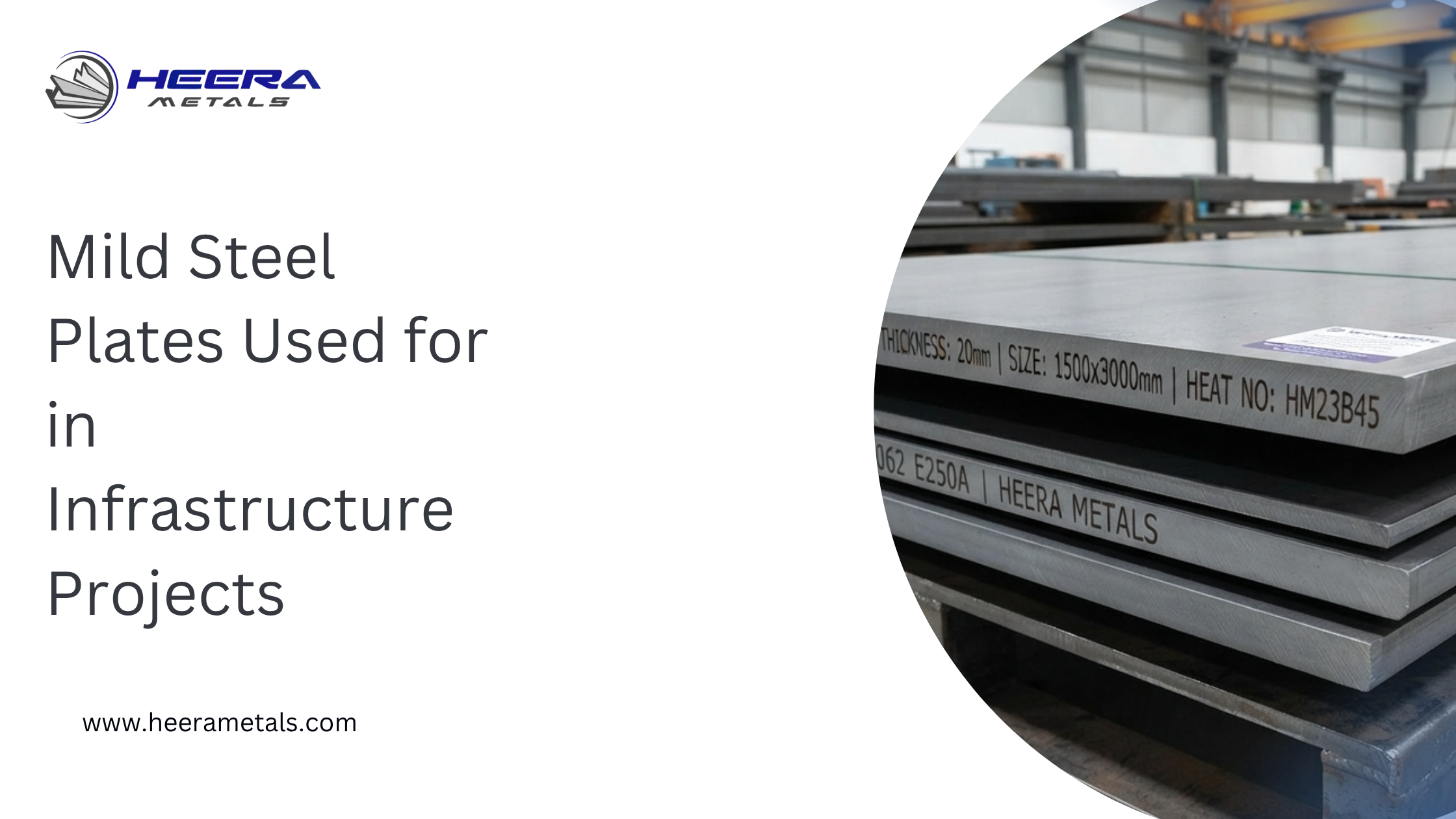
What Are Mild Steel Plates Used for in Infrastructure Projects?
Infrastructure development depends on materials that can deliver strength, durability, and long-term value under demanding conditions. Whether constructing bridges, highways, industrial facilities, commercial buildings, or public utilities, engineers require materials capable of supporting significant structural loads while remaining cost-effective and easy to fabricate.
Among the most widely used construction materials, MS plates (mild steel plates) have become a fundamental component of modern infrastructure projects. Their combination of mechanical strength, weldability, versatility, and affordability makes them an essential material across civil engineering, industrial construction, and structural fabrication applications.
This article explores the major applications of mild steel plates in infrastructure projects, their advantages, and why they continue to play a critical role in large-scale construction and engineering developments.
Understanding Mild Steel Plates
Mild steel plates are flat steel products manufactured from low-carbon steel. Their relatively low carbon content provides an ideal balance between strength, ductility, and machinability, making them suitable for a wide range of structural and fabrication requirements.
Unlike specialized alloy materials, mild steel plates can be easily cut, welded, drilled, bent, and formed without compromising structural integrity. This versatility allows engineers and fabricators to use them in both simple and complex infrastructure applications.
Key Characteristics of Mild Steel Plates
- Excellent structural strength
- High durability under load
- Superior weldability
- Easy fabrication and machining
- Cost-effective material solution
- Availability in various thicknesses and dimensions
- Suitable for heavy-duty structural applications
These characteristics have made structural steel plates one of the most trusted materials in construction and engineering projects worldwide.
Why Mild Steel Plates Are Important in Infrastructure Development
Infrastructure projects are designed to serve communities and industries for decades. The materials used must therefore provide reliable performance, structural stability, and long-term durability.
MS plates for infrastructure development are valued because they offer:
- High load-bearing capacity
- Reliable structural reinforcement
- Design flexibility
- Efficient fabrication
- Reduced construction costs
- Long service life
As infrastructure projects continue to increase in complexity and scale, mild steel plates remain a practical solution for meeting both engineering and economic requirements.
Applications of Mild Steel Plates in Infrastructure Projects
Bridge Construction and Transportation Infrastructure
Bridges represent some of the most demanding structural applications in civil engineering. They must withstand continuous traffic loads, environmental stresses, and long-term operational demands.
MS plates for bridges are commonly used in:
- Structural support systems
- Bridge deck reinforcement
- Bearing plates
- Connection plates
- Load transfer components
- Fabricated bridge assemblies
The strength and durability of mild steel plates help ensure structural stability while supporting the heavy loads associated with transportation infrastructure.
In addition to bridges, steel plates are frequently incorporated into flyovers, pedestrian walkways, railway infrastructure, and transportation support systems.
Building Construction and Structural Frameworks
Modern residential, commercial, and industrial buildings rely heavily on steel-based structural systems.
MS plates in building construction are used to manufacture:
- Structural columns
- Beam connections
- Roof support structures
- Floor reinforcement systems
- Staircases and access platforms
- Structural bracing components
Their ability to withstand significant loads while allowing flexible fabrication makes them an ideal choice for large-scale construction projects.
As building designs become increasingly complex, mild steel plates provide engineers with the flexibility required to create safe and efficient structural frameworks.
Structural Reinforcement and Retrofitting Projects
Many existing structures require reinforcement to meet modern safety standards, accommodate increased loads, or extend operational life.
MS plates for structural reinforcement are commonly used for:
- Beam strengthening
- Column reinforcement
- Foundation support upgrades
- Retrofitting aging structures
- Seismic strengthening applications
By increasing structural capacity without requiring complete reconstruction, steel plate reinforcement provides a cost-effective solution for infrastructure modernization.
Industrial Facilities and Engineering Projects
Industrial infrastructure demands materials capable of handling heavy equipment, operational loads, and challenging working environments.
Mild steel plates for industrial projects are widely used in:
- Manufacturing facilities
- Processing plants
- Warehouses
- Logistics centers
- Power generation facilities
- Chemical and engineering installations
Within these facilities, steel plates contribute to the fabrication of:
- Equipment platforms
- Machinery foundations
- Structural frameworks
- Storage systems
- Support structures
Their durability and fabrication flexibility make them a preferred material for industrial engineering projects.
Fabrication of Heavy-Duty Structural Components
One of the most significant advantages of mild steel plates is their suitability for structural steel fabrication.
Fabricators use MS plate fabrication processes to manufacture:
- Structural assemblies
- Industrial supports
- Heavy-duty brackets
- Equipment bases
- Custom engineering components
Because mild steel plates can be easily cut, shaped, and welded, they provide an efficient solution for projects requiring customized structural components.
The resulting fabricated structures offer both strength and reliability while helping maintain project efficiency and cost control.
Support Structures and Utility Infrastructure
Support structures are essential components of infrastructure systems and industrial facilities.
MS plates for support structures are commonly used in:
- Pipe support systems
- Utility frameworks
- Communication towers
- Transmission structures
- Equipment mounting systems
These applications require materials capable of delivering consistent performance under varying environmental and operational conditions.
The excellent mechanical properties of mild steel plates make them particularly well suited for these demanding roles.
Benefits of Using Mild Steel Plates in Infrastructure Projects
High Structural Strength
Mild steel plates offer excellent resistance to bending, compression, and impact forces. Their strength allows them to perform effectively in demanding load-bearing applications.
Cost-Effective Construction Material
Compared to many alternative materials, mild steel plates provide an outstanding balance between performance and affordability. This makes them a preferred choice for budget-conscious infrastructure projects.
Excellent Fabrication Properties
The superior weldability and machinability of mild steel simplify manufacturing and installation processes, reducing project timelines and fabrication costs.
Versatility Across Multiple Industries
From bridge construction and commercial buildings to industrial engineering and public infrastructure, mild steel plates can be adapted to numerous applications.
Long Service Life
When protected with appropriate surface treatments and corrosion protection systems, mild steel plates can provide reliable performance for decades.
How Mild Steel Plates Enhance Infrastructure Performance
The widespread use of steel plates in civil engineering is driven by their ability to improve structural performance in several key areas.
Improved Load Distribution
Steel plates help distribute loads efficiently throughout structural systems, reducing stress concentrations and improving stability.
Increased Structural Reliability
Their strength and durability contribute to safer infrastructure capable of withstanding long-term operational demands.
Faster Project Execution
The ease of fabrication and installation allows contractors to accelerate project schedules without sacrificing quality.
Reduced Lifecycle Costs
Durability and minimal maintenance requirements help lower total ownership costs over the lifespan of the structure.
These advantages make construction steel plates a valuable investment for infrastructure developers and project owners.
Factors to Consider When Selecting Mild Steel Plates
Selecting the appropriate steel plate requires careful evaluation of project requirements.
Important considerations include:
Plate Thickness
Thickness should be chosen based on structural load demands and design specifications.
Mechanical Strength Requirements
Engineers must assess:
- Yield strength
- Tensile strength
- Ductility
- Impact resistance
Environmental Conditions
Projects exposed to moisture, chemicals, or harsh weather conditions may require protective coatings or corrosion-resistant treatments.
Fabrication Requirements
Material selection should align with welding, cutting, forming, and machining requirements to ensure efficient production and installation.
Conclusion
Mild steel plates continue to serve as one of the most important materials in modern infrastructure development. Their combination of structural strength, fabrication flexibility, affordability, and long-term durability makes them indispensable across construction, civil engineering, and industrial applications.
From bridges and highways to commercial buildings, industrial facilities, and structural reinforcement projects, MS plates provide the performance required to support safe and reliable infrastructure. Their excellent strength-to-cost ratio enables engineers and project developers to achieve durable structural solutions while maintaining cost efficiency.
As infrastructure investments continue to grow worldwide, the demand for high-quality mild steel plates, structural steel fabrication, and engineered steel solutions will remain strong. For projects requiring dependable performance, versatility, and long-term value, mild steel plates continue to be one of the most trusted materials in the construction industry.



Leave a Reply