
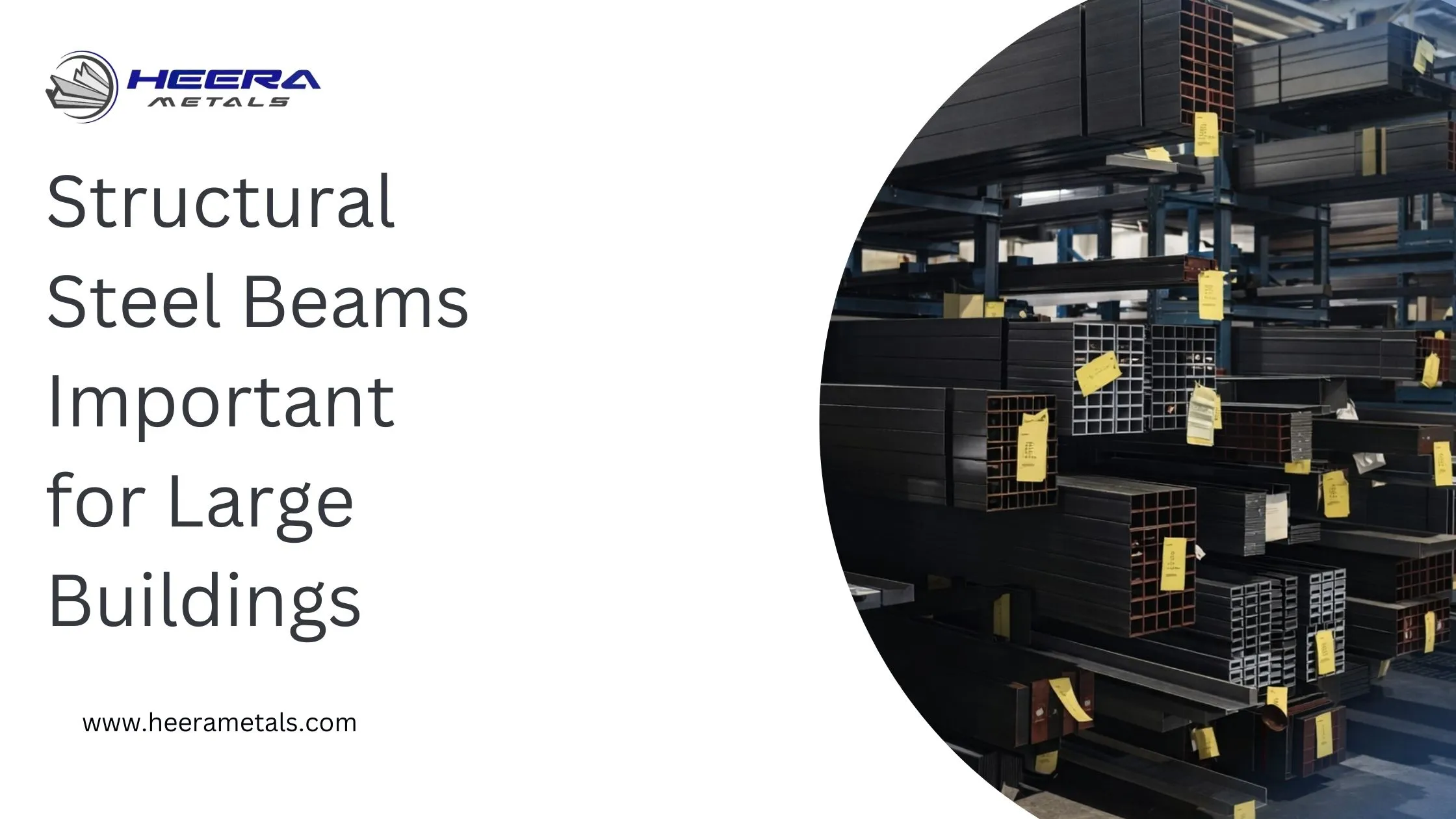
Why Are Structural Steel Beams Important for Large Buildings?
When you look at the skyline of any modern city, the towering structures that define it owe their existence largely to structural steel beams. The importance of structural steel beams in contemporary construction cannot be overstated, as they form the backbone of skyscrapers, commercial complexes, and industrial facilities worldwide. Understanding steel beams for large buildings reveals why architects and engineers consistently choose structural steel in construction over alternative materials.
What Are Structural Steel Beams and How Do They Work?
Understanding Load Bearing Steel Beams
Structural steel beams are horizontal load-bearing members designed to support vertical and horizontal loads across wide spans. These engineering design principles utilize steel’s exceptional strength-to-weight ratio to create efficient structural frameworks. The steel beams in buildings transfer loads from floors, roofs, and walls down to columns and ultimately to the foundation, ensuring building stability throughout the structure.
Common Types: I-Beams and H-Beams in Construction
The most recognizable forms are I-beams and H-beams, named for their cross-sectional shapes. I-beams feature flanges connected by a vertical web, optimizing material distribution for bending resistance. H-beams have wider flanges and are ideal for load bearing steel beams applications requiring resistance to both vertical loads and lateral forces. Steel girders, which are large, heavy-duty beams, support even greater spans in major structures.
Why Are Structural Steel Beams Used in Large Buildings?
Superior Load Distribution Capabilities
One primary reason why are structural steel beams used in large buildings relates to their exceptional load distribution characteristics. The structural steel framework efficiently transfers tremendous weights across vast distances, allowing architects to design open floor plans without numerous supporting walls. This capability enables the creation of column-free spaces essential for modern commercial building construction.
Steel beams for high-rise buildings can span 50 feet or more without intermediate support, compared to concrete alternatives that require more frequent load-bearing walls. This structural efficiency translates directly into usable floor space and design freedom for commercial buildings.
Ensuring Structural Integrity in Tall Structures
The structural integrity of large buildings depends critically on the performance of their primary framing members. Structural steel beam applications in high-rise construction address the unique challenges of tall buildings, where gravitational loads accumulate floor by floor. The strength of columns and beams in structural steel systems allows them to support these massive cumulative weights while maintaining safety factors.
Steel frame buildings demonstrate remarkable consistency in material properties compared to concrete or masonry. This predictability allows engineers to design with confidence. The importance of structural steel beams becomes especially evident in projects exceeding 20 stories, where material reliability is essential.
Benefits of Structural Steel Beams in High-Rise Construction
Speed and Efficiency in Construction
One of the most compelling steel beam construction benefits is the speed of erection. Prefabricated steel structures arrive at construction sites ready for assembly, significantly reducing construction timelines compared to cast-in-place concrete. This efficiency means lower labor costs, reduced financing expenses, and faster occupancy.
The structural steel design process allows for precise fabrication in controlled factory environments. Beams arrive at sites with pre-drilled holes, welded connections, and protective coatings already applied. This precision manufacturing minimizes field adjustments and ensures quality control.
Flexibility in Structural Steel Design
Architects appreciate structural steel in construction for its design flexibility. The strength of load bearing steel beams allows for creative architectural expressions, including cantilevers, wide spans, and irregular geometries. This design freedom has enabled iconic structures worldwide.
Modifications and expansions prove easier with steel frame buildings. Adding floors, cutting openings for new services, or reconfiguring spaces can often be accomplished more readily than with concrete structures. This adaptability extends building lifespan and return on investment.
How Steel Beams Support Large Commercial Buildings
Managing Vertical and Horizontal Loads
The question of how steel beams support large commercial buildings centers on their ability to manage both vertical and horizontal loads. Vertical loads include the building’s weight plus occupants and equipment. Horizontal loads come from wind, seismic activity, and thermal expansion.
Structural steel beams work with columns and beams to create a three-dimensional framework that resists these forces. The connections between members transfer loads through the structural steel framework while allowing controlled deflection. This engineered flexibility contributes to building stability.
The Role of Steel Girders in Supporting Multiple Floors
Steel girders serve as primary structural members supporting multiple secondary beams. In typical commercial building construction, girders span between columns while smaller beams connect to girders, creating a grid that supports floor systems. This hierarchical load path efficiently channels forces to the foundation.
Heavy structural steel girders can carry loads equivalent to dozens of vehicles. The precision required in structural steel beam applications at this scale demands sophisticated engineering and quality fabrication.
Role of Steel Beams in Skyscraper Construction
The role of steel beams in skyscraper construction extends beyond simple support. Buildings exceeding 100 stories require structural systems that can support enormous gravitational loads while resisting lateral forces from wind and earthquakes. Reinforced steel systems, often incorporating composite construction with concrete, achieve the necessary strength.
Modern skyscrapers use specialized structural steel frameworks like tube structures or diagrid systems. These innovative approaches distribute loads more efficiently than traditional grids, allowing ever-greater heights.
Addressing Wind Load Resistance
Wind load resistance becomes paramount as building height increases. At upper floors of skyscrapers, wind forces can exceed gravitational loads. Structural steel in construction excels at managing these lateral loads through its strength and ductility.
Engineers design steel beams for high-rise buildings to work with diagonal bracing or moment-resisting connections. The structural steel framework flexes slightly under wind loads, then returns to its original position, critical for occupant comfort and building survival during storms.
Importance of Steel Beams in Earthquake-Prone Areas
How Structural Steel Improves Building Safety During Seismic Events
The importance of steel beams in earthquake-prone areas stems from steel’s ductility, its ability to deform without fracturing. During seismic events, earthquake-resistant structures must absorb tremendous energy through controlled yielding. Structural steel beams can undergo significant deformation while maintaining structural integrity.
Seismic design incorporates special moment frames where steel beams and columns are connected to allow rotation at joints. This controlled flexibility dissipates earthquake energy through the structural steel framework, protecting building occupants.
Engineering Design Principles for Seismic Resistance
Engineering design principles for earthquake resistance in structural steel beam applications include base isolation, damping systems, and redundant load paths. Base isolators separate the building from ground motion, while dampers absorb seismic energy.
Building codes in seismically active regions mandate specific detailing for structural steel design, including welding procedures and inspection protocols. These requirements reflect decades of research and real-world earthquake performance data.
Structural Steel Beams vs Concrete Beams: A Comparison
Strength and Span Capabilities
When comparing structural steel beams vs concrete beams, several distinctions emerge. Steel beams achieve longer spans with less material depth, maximizing usable floor-to-ceiling height. A steel beam might span 60 feet with a depth of 24 inches, while a concrete beam spanning the same distance could require 36 inches or more.
The strength-to-weight ratio favors steel significantly. This means lighter loads on foundations, critical in areas with poor soil conditions. Additionally, prefabricated steel structures reduce construction weight compared to formwork and wet concrete.
Speed of Construction and Long-Term Value
Steel beam construction benefits include dramatically faster erection times. This speed advantage compounds throughout a project, potentially saving months on large buildings. When considering total project duration, financing costs during construction, and earlier revenue generation, structural steel in construction often proves more economical.
Modern protective coatings ensure that steel beams in buildings maintain structural integrity for decades. When properly maintained, structural steel frameworks can last centuries. Steel ranks among the most recycled materials globally, with structural steel maintaining its properties through multiple recycling cycles.
Conclusion The Essential Role of Structural Steel Beams
The importance of structural steel beams in large building construction reflects their unique combination of strength, flexibility, speed, and reliability. From enabling architectural innovation through long spans to ensuring life safety during earthquakes and storms, steel beams for large buildings remain the preferred solution for ambitious projects worldwide.





Leave a Reply